INDUSTRY BEAT: DIWO REALITIES: WHY WON’T KICKSTARTER AND TWITTER SAVE INDIE FILM?

By in Columns
on Tuesday, July 20th, 2010

"HEART OF NOW."

Facebook, Twitter, Open Indie, Kickstarter — are these new media tools fulfilling their great promise for indie filmmakers? Or are they just a drag? The answer lies somewhere in between.

While social media’s cheerleaders are many — Scott Kirsner, Lance Weiler, Ted Hope, Peter Broderick, Jon Reiss — the solvency of an Internet-enabled DIY filmmaking-and-distribution model is far from guaranteed. At this early stage, the successes are few and far between (Tze Chun’s Sundance drama Children of Invention; Franny Armstrong’s eco-doc The Age of Stupid), and some are calling a sustainable indie-film infrastructure built around crowd-funding and social-network marketing a naïve proposal.

“I don’t think it’s going to be the savior of independent film,” says consultant Brian Newman, the former executive director of Renew Media, “but I do think it’s a new arsenal of tools that we can potentially use.”

Certainly, some filmmakers have been able to employ new media tactics with varying degrees of success. Cult filmmakers like Cory McAbee (Stingray Sam, The American Astronaut) and Crispin Glover (who recently sold out several shows of his films It Is Fine. Everything Is Fine! and What Is It? at New York’s IFC Center) have converted active Web presences into paying customers. The Finnish sci-fi spoofers behind Star Wreck have generated nearly 14,000 screening requests and a reported 120,000 euros in crowd-funding (for a budget of several million) for their latest in-the-works Nazis-from-the-moon sci-fi epic Iron Sky. And while it’s hard to quantify the impact of the social media support for Banksy doc Exit Through the Gift Shop ($2.1 million at the box office and counting), the film’s distribution consultant Richard Abramowitz says the release benefited from “having credible champions.” Noting the advocacy of Kevin Smith and his 1.7 million Twitter followers, Abromowitz says, “You need the right people to communicate to the other right people.”

On the other hand, DIY production maven Joe Swanberg, director of Hannah Takes the Stairs and Alexander the Last, has become cynical about the participatory approach. “I think it’s completely overwhelming and totally worthless,” he says. “I don’t think a Facebook message or a Twitter update translates to asses in seats. Maybe if your movie is free online then the technology could lead someone to watching your movie. But if the technology needs to take more than one step — from computer to the real world — you lose people.”

As proof, Swanberg relates an anecdote about his wife’s Chicago-based homemade ice-cream company Nice Cream. After continually Tweeting and e-mailing updates to prospective buyers, it wasn’t until she went on a local TV show that sales jumped. “It’s totally old school,” says Swanberg. “But that’s what it is: get yourself on the radio, get yourself on the TV. That’s still where the audience is.”

Like many filmmakers, Swanberg’s biggest complaint about the DIY model is that it prevents him from working on new films. Even self-distribution advocate Mynette Louie, producer of Children of Invention, which so har has recouped over 30 percent of its budget from DIY efforts, agrees with this sad reality. “Doing the distribution took a lot of precious time away from our other projects,” she says. And the team’s Kickstarter campaign to help fund self-distribution failed, garnering just $1,430 of a $5,000 goal. “We [were] sort of relieved about it,” Louie adds, “because we were dreading having to ship large posters and signed DVDs to [our contributors].”

But DIY pioneer Arin Crumley, co-director of Four Eyed Monsters and co-founder of Open Indie, the Web-based utility that allows audiences to request film screenings, offers a counterargument: essentially that trying to survive as a filmmaker nowadays goes beyond any one project. “If you want to connect with audiences, and you want to bring people together around ideas, imagery, concepts, feelings, culture, that is a process that extends beyond taking up cameras and pointing at things,” he says. “The entire rest of the process shouldn’t be sold short. I’m not saying a director should take the burden of everything. Maybe they need to delegate. But part of filmmaking is connecting with audiences.”

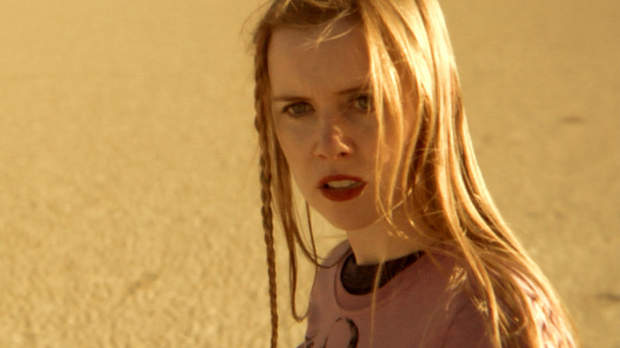
Connecting and cultivating audiences isn’t always easy, especially if you don’t have access to sci-fi fanboys or Kevin Smith. When Zak Forsman, a founding member of film collective Sabi Pictures, paid $100 to help launch Open Indie, his dramatic feature Heart of Now rose to the top of the catalogue, with, at last count, an uninspiring 123 requests. “There’s potential there,” says Forsman, “but in the last couple months, the number has plateaued and there hasn’t been an effort to build a community more than the filmmakers who have put up their films.”

Crumley admits that Open Indie has yet to take hold with regular moviegoers. “It’s a new idea,” he says. “Nobody has hit a home run yet, but that will happen. What’s needed is a film to take that brave step of using a community distribution approach for an entire campaign.” Kickstarter, on the other hand, has proved more effective, according to Crumley, particularly for films that have very low budgets; he cites examples from Open Indie participants such as Gregory Bayne ($25,000 for his upcoming doc) and David Branin ($17,000 for the postproduction on indie drama Goodbye Promise).

Indeed, while Forsman’s requests have been subdued, he welcomes the attention he has received. Through Open Indie and another similar site called Crowd Controls (crowdcontrols.cc), potential screening hosts have come forward from film universities, film clubs and café screening series, from Portland, Maryland and New York to even Capetown, South Africa. Forsman has, however, also learned another important lesson. Using Facebook and Twitter to deliver a general sales pitch to friends and followers was the “equivalent of a guy at a film festival shoving their DVD in people’s hands.” What’s been far more effective, he says, “is developing sincere relationships with people, both online and at film festivals.”

Such lessons indicate one of the central problems of the new do-it-with-others revolution; it may be just too early in the process. Noting such up-and-coming artists as Zoe Keating and Josh Frese, Newman says, “We’re still at this beginning clumsy stage. But in the music industry, there are musicians who have completely left their labels and are selling all their own albums and it’s working for them. And that’s what people are looking at. If you can build a fan base there, why can’t we do it with independent film?”

You can follow any follow up comments to this entry through the RSS 2.0 feed.

  • http://cinemapurgatorio.com Ray Privett

    The Flaming Lips’ Christmas on Mars has screened in hundreds and hundreds of movie theaters, mostly through suggestions made by the audience.

    The methods used on that film have been used many times again on many other films.

    cinemapurgatorio.com

  • http://www.shericandler.com Sheri Candler

    really tired of hearing how such and such is going to “save” indie film! Until we find the one runaway success (which probably won’t be repeated) that can be credited with using social networking, is everyone seriously weighing whether they will continue to use that method?

    In Swanberg’s case, absolutely mass media should be used to sell ice cream, it is a mass market product. Indie film is definitely niche and most of the people I work with can’t afford to use mass media or it wouldn’t be right for reaching their film’s audience. Stop blaming the tools and deciding whether online methods are really the best course. When you have little resources, it is your only choice and you have to use those tools regularly for them to work. Is it gonna be slow? absolutely! Is it gonna be labor intensive and suck away hours of your life? absolutely. What other choice do you have? Not finding your audience, not building up connections, not screening your film to an audience?

    Bring on Twitter, Facebook and all the other online communities, I have the time and the energy if I really believe in the film. If you are making films with the expectation that success will be swift easy and financially viable, you’re in the wrong occupation. It is going to be goddamn hard work for very little pay. End of story.

  • http://www.digitaldorr.com Chris Dorr

    This is one of the best, and properly nuanced articles on social media and independent film I have read over the past year. This is an area that is neither black or white. There is a lot of gray, an area that has to have a lot of experimentation–which means there will be more failure than success in its initial stages, stages which will extend far in to the future. The point is to share the results of the experimentation, so others can learn what works and what does not.

  • Pingback: cinespin | Blog |

  • http://www.sokap.com David Geertz

    Good article and let me add my two cents as I am coming from a place in the middle both as a producer and a platform developer.

    You would have to be borderline retarded to make a statement saying that social media WILL or WILL NOT save independent film, as the current market has so many variables that are shifting – even as I write this comment. The entire industry is in a state of flux or as some people have put it – cleansing.

    The people who are experimenting at the moment may not be the ones who benefit the most, as in most business cases (yes….film is a business) the pioneers are the ones who suffer and its the next generation that fix bugs, optimize and commercialize.

    Until we ride out the wave of mediocre content, content glut, declining ad budgets, shrinking retail price, banking and international credit issues, the star system, and the exponential growth of filmmaker entitlement disease, we will more than likely continue to see sites and projects fight to the next big thing in social media for film.

    We’ll also continue to be invited to a bunch of expensive seminars and panels where we have to pay to hear people bitch about how things aren’t working, and be inundated by “consultants” providing “expertise” on the matter that clearly has yet to be defined.

  • http://www.jbmovies.com John Wayne Bosley

    One of the sites that people are NOT talking about, which has had the greatest success for filmmakers, is the best social media site out there: youtube. Most people don’t consider it a social media site, but it gives you the ability to friend, subscribe, comment, etc. The best part of the site is that your videos can be embedded. Filmmakers need to figure out how to utilize that site and create videos that actually work. When you figure out why certain filmmakers are having success with youtube videos, then you’ll start creating your content in that manner. It’s really not much different than Facebook or Twitter, but just in the form of short video clips.

    I was on Twitter since Nov. 2008. In the first year I started the first twitter-based film festival. I have over 6,000 followers. One of the best parts of the follower list is that most of them are not filmmakers or in the film business at all. They are just ordinary people in different professions. This is great because the indie film business is very insular and that is the number one reason why it is struggling. Filmmakers have a tendency to act very introverted. We hide in clusters of other indie film people.

    But, I will say, that now, almost 2 years after being on Twitter it has very little value to promoting. What I gained from the twitter-based film festival was understanding on how people think in today’s world. I understood that size does matter when it comes to the size of your video you’re promoting. And I have been radically changing how I make movies from this point on.

    Social media and crowdfunding will not save indie film. The cinematic stories will. You could essentially have the most successful crowdfunding campaign ever, but it doesn’t prove you have an audience.

  • http://heavybagmedia.com/blog Dennis Peters

    The bigger issue is not that social media marketing doesn’t work, because it clearly does, it’s that most DIY filmmakers don’t know how to market their films. They are not marketers (they are filmmakers) and there is a misunderstanding of what social media marketing is about. Facebook and twitter can be powerful tactics but they are just that, tools to be used. It’s creating a strategic marketing plan of how to use FB, Twitter, Myspace, YouTube, SMR’s, blogger outreach, forums, and blogs, to name a few tactics, that leads to a successful marketing campaign for a film or any other product. Throwing out tweets and FB updates to add fans and followers (to reach your 5,000) is not a strategy.

    There is no doubt that social media marketing is not a magic bullet to “get asses in seats”. What it can do is effectively help filmmakers spread some word of mouth about their film. It is hard to quantify the impact of this kind of marketing. Looking at the example of the ice cream shop who is say that their efforts in social media didn’t lay the ground work and the TV exposure was the tipping point?

    SMM can also help leverage the relationships built through these social tools to find partners or collaborators who can help you get additional coverage. This might be a local press person, radio host, or arts editor that you reach out to through these tools and enlist them into helping you.

    Marketing a film on any budget is difficult. If it was just about the money (going back to TV and Radio “where the audience is”) then every studio film would be a hit.

    Ideally, Indie filmmakers want to maximize a small media spend and PR efforts to help build an audience and drive them to social platforms for deeper and longer lasting engagement. Build out your WOM ambassadors. Of course that takes time and money but most importantly strategic planning.

  • http://crowdcontrols.cc Brian Chirls

    There is no software or platform in the world (not even Crowd Controls) that will magically make independent films profitable without active audience engagement, story integration and a lot of work.

    It is necessary to make a fair comparison between social media tools and the old methods. Dollar for dollar, hour for hour, social media is far more effective than traditional marketing, because it’s traceable, spreadable and highly targeted. It’s cheaper per fan than advertising because the costs of social media aren’t artificially raised by a small number of gatekeepers, as in traditional media. And even where social media results in a smaller fan-base, each fan is much more valuable because they’re so specifically targeted.

    Of course DIY filmmakers complain that social media marketing takes a lot of time. But imagine how much more time and money it would take to personally plan, create and place advertising, while acting as one’s own publicist.

    Conversely, for any film with a marketing budget in six, seven or eight figures, imagine what you could achieve by allocating part of that money towards a web video series, a mobile game and a pair of bloggers and Twitterers. Even five figures could buy you a lot in social media.

    And for those films with little or no resources, there isn’t much alternative. There’s lots of innovation and tweaking to come, but I think for those filmmakers that can figure out how to extend their stories beyond the screen, we’re doing pretty well already.

  • http://www.thinkoutsidetheboxoffice.com Jon Reiss

    Besides the fact that no one or two techniques will “save” indepenent film, it is important to remember that every film and filmmaker is different. I think equally important is for filmmakers to understand that the filmmaking process does involve connecting to audiences. Do we really think there will be a time when there are enough distributors to write checks for and distribute all of the thousands of films being made every year? The earlier we start that process of audience connection (for one film or a career) the better of we are. I totally get the amount of work involved. I also totally get that writer/directors are not always suited for this work. I feel filmmakers need to begin collaborating with a whole new group of people who can help them with this process of audience engagement. Just as you bring on line producers, dps and editors – I feel that you should have someone on board – a Producer of Marketing and Distribution as it were – to help with this process. I met a filmmaker in NYC who had a film and was struggling to figure out how to get it to market. I mentioned this concept to her and she brought on 2 PMDs to help her release her film. The PMDs were excited about the opportunity and the director was excited about having someone do this work. I agree that we are in a transitional mode – and there are new tools to help distribute and market film being devised every day/month/year. Social media and crowdfunding are just 2 broader categories of tools of many. Ultimately filmmakers need to devise a distribution and marketing strategy for their specific films (most filmmakers have been doing this to some extent in their business plans for years). Filmmakers (and all creative content producers frankly) are much better off getting a team on board as early as possible. I feel that their lives and the lives of their current and future films will be better for it.

  • http://www.screen-movie.com @davidpbaker

    We are getting everything completely out of perpective here. I think its safe to say we now realise we now have to create “creative businesses” (If we don’t think we can get deals in the mainstream industry, and this still applies if we want to juggle both)

    I don’t know about anybody else, but when generations before started businesses it takes them “YEARS” to build any customer base. And yet, in one of the worst biz model professions in the world, (filmmaking) where filmmakers have to keep looking for money for every film, unlike most businsses, filmmakers also expect to build followings on 30-90 day plans. And if they don’t, “Shit, its just not working”!

    Most of the filmmakers that work in the biz never had success overnight, it took a lot of them a long time, so why should it be any different with this. Why should it not take 5-7 years or even more! I mean these platforms where not even here until recently!

    I don’t really believe in funding crowding source platforms as such. Thats not the issue. If you push to do great work over YEARS, even on a small scale, just like other filmmakers did, you will build a mailing list following, and I am sure you can then go to that following direct like Robert Greenwald done.

    There really is very little patience, and that will be filmmakers downfall. We are all so passionate about talking and stressing over how we market. I just wish that same energy would go into wanting to create brilliant scripts. I don’t care what anybidy says, if we make better films, we get noticed, people give us a job, we then get entreprenuerial and juggle both type of work.

    On a whole, whether social media, or industry work, give it time for christsake! If you want the destination overnight, you are not really in this biz for the right reasons.

    David

  • Pingback: Are Twitter and Facebook a waste of time?

  • Pingback: Why documentaries will crowdfund better than indy features : DocumentaryTech

  • http://Www.paulrachman.com Paul Rachman

    I really see Kickstarter as the indie filmmaker’s development fund. This type ofmoney has never been readily available to the indie filmmaker. With my new film Lost Rockers we were able to tap into the fan base icky last film American Hardcore, we successfully raised $16,000 which will allow us to shoot our essential interviews in LA, NY and London. We’ll cut a short work in progress andthen go to potential traditional distribs and financiers with something substantial to show them.
    T

  • http://openindie.com Kieran Masterton

    I would second much of what Brian, Jon, Sheri and @davidpbaker have said. None of these platforms are the saviour of independent film, we need to stop thinking about what’s going to save independent film as a whole and start thinking “what works for my film”. Likewise, nobody is going to build a huge audience in a matter of months these things take years and are pretty much a full-time job and I totally appreciate the frustrations filmmakers face when they say stuff like, “hang on when are we supposed to be making films?”.

    That said, no social networking platform or film distribution tool with social hooks is going to do the job of promoting the film for the filmmaker and filmmakers need to take ownership of that task themselves and/or recruit a PMD to do that for them. Platforms can help make things more viral by lowering the resistance, but they can’t grow an audience from nowhere.

    As Brian says there is a huge amount of experimentation and tweaking ahead, none of us have built platforms like this before and we are therefore experimenting with what works and what doesn’t. From OpenIndie’s point of view we have a constantly growing list of features and suggestions from filmmakers that is continuously being reviewed and worked into our development roadmap.This space is evolving and nobody has it right yet, especially not OpenIndie.

    Our platform is in beta and needs a lot of work to make it work how filmmakers would like it. There are a thousand directions we could be taking and I fear that we sometimes suffer from analysis paralysis. We are working on a strategy to these choices easier… more on that soon. Anyway, my feeling is that platforms like OpenIndie are going to evolve into tools that work for films that suit being distributed in this specific manner to niche audiences. It is not going to be a tool that suits everyone and that’s not what we’re trying to build. That said, we are doing our best to build something that is as adaptable as possible for those who do believe this is the right method of distribution for them.

    I think the current collaborations between filmmakers and technologists / developers are fantastic and I hope we see more and more of them, only good can come from that situation. Again, as Brian says those that can grow their story out of the world of the film will see themselves in good stead. None of us have produced a one-size-fits all solution but none of us are going to. Filmmakers should continue to tell incredible stories and, I hope, techies will continue to try and help get as many eyeballs on those films as possible.

    Kieran Masterton
    OpenIndie Co-Founder

  • http://www.katahdin.org Daven Gee

    We took a timid step two months ago to launch a modest $3k campaign on indiegogo.com for one of our in-progress documentaries, “Hava Nagila, What Is It?” In about six weeks we attracted almost $14k in funds to support shoots otherwise impossible. On some days we were getting 9,000 views of our funding clip.

    How this happened we should have guessed: we have a strong email list from past films, a topic that’s easy to connect to, and a team willing to use a lot of daily elbow grease.

    So far, crowdfunding is outpacing foundation grants and broadcasting dollars…but we’ll need these two in a bigger way eventually. Pluses & minus aside, what we know we have is a strong market for the film and a core audience just a few clicks away.

    If “production is the new distribution” it likely means more work in all areas all the time, but for some projects (w/popular topic or filmmaker) the payoff may be worth it. Could mean crowdsourcing becomes as much a popularity contest as other fundraising methods…but at least it’s transparent. Can’t beat the turn-around time on getting the $ either.

  • http://www.InsideIndie.com Andrew Middleton

    There’s definitely a danger in focusing too much attention on social media tools such as Facebook, Twitter, etc., which simply might not be around in a couple of years (the falling star of social media has been widely documented in recent days). At least one lesson to be learned is that (since there really isn’t another option at this point), one’s social media campaign needs to have as its goal the acquisition of email addresses and other more (somewhat) stable contact information. Building a faithful fan base is a non-negotiable for most independent filmmakers today, and securing contact information is one of the first steps in that process.

  • http://cinematech.blogspot.com Scott Kirsner

    My belief is that if filmmakers are convinced that crowd funding or social media outreach can’t help them, they are probably right.

  • Pingback: Help me! I’m Tweeting! « Celluloid Outlaw–all about independent film

  • Mct75

    There is still a long way to go for indie filmmakers to be able to compete with Studio P & A budgets. Selling products online and film marketing are two completely seperate concepts. The sooner indie producers can leverage existing Internet marketing platforms the better.

VOD CALENDAR

Filmmaker's curated calendar of the latest video on demand titles.
All In: The Poker Movie A NY Thing #Regeneration
See the VOD Calendar →
Filmmaker's Best Of 2011

Entries (RSS) and Comments (RSS)

Filmmaker Magazine is powered by WordPress.org.