“HOW TO DIE IN OREGON” | director, Peter D. Richardson
By in Sundance Responses
on Sunday, January 23rd, 2011

[PREMIERE SCREENING: Sunday, Jan. 23, 12:00 pm -- Temple Theatre]

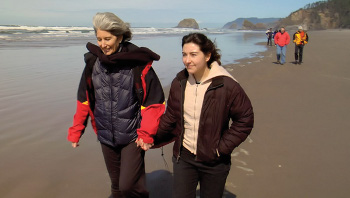
How to Die in Oregon tells the stories of terminally ill Oregonians as they decide when, and whether, to end their lives at the time and circumstance of their own choosing under Oregon’s Death with Dignity Act. What inspired me to make the film was the desire to explore the profound choices an individual would have to make in order to take the life-ending medication. I knew that telling this story was going to be difficult because it would require extraordinary access and a willingness to participate in the film, not only on the part of an individual but sometimes an entire family and, critically, a physician. It wasn’t until two years into filming that I found what I felt to be this critical combination of characters to tell every aspect of the story. Cody Curtis, who had been diagnosed with terminal cancer, and her family gave me access into their lives and insight into the choice Oregonians have at end of life.

When Cody’s physician Dr. Morris agreed to be on camera — first to film regular checkups with Cody and eventually to provide an on-camera interview — I was very surprised. Up until that point, in both casual conversation and on-camera, Cody had only referred to her as “Dr. M” in order to preserve her anonymity. Physician aid-in-dying is still an immensely controversial issue, especially for doctors, so it was at great risk that Dr. Morris agreed to participate. My reaction to the news was one both of excitement and a great sense of responsibility: a responsibility to get Cody and Dr. Morris’s story right, both for them and for the many others who would eventually see and learn from it.

I think physician aid-in-dying is likely to be the next major medical/ethical issue we confront as a nation. An aging baby boomer population that will desire greater control and choice in end-of-life decisions is going to put a microscope on every aspect of how we die in this country. My hope for the film is that it opens a dialogue on this critical issue by taking a look at the experiences of a few Oregonians. None of that would be possible without the courage of individuals like Dr. Morris, Cody Curtis, her family, and the many others who allowed me into their lives. Though these individuals ultimately had a choice about when they died, a choice most others do not have, I believe there is much to be learned from their stories and the way that they approached the end.

You can follow any follow up comments to this entry through the RSS 2.0 feed.

  • Pingback: Tweets that mention “HOW TO DIE IN OREGON” | director, Peter D. Richardson | The Filmmaker Magazine Blog -- Topsy.com

  • Drew from UVU Honor Program

    Without a doubt this is the saddest movie I have ever seen. It was also very thought provoking as well as touching. Never before have I had my brain stimulated and my heart touched at the same time with such intensity.

  • Pingback: How To Die In Oregon (2011) | Oregon Movies, A to Z

  • Patti Martinez

    I can’t wait to see this film. My sister was terminally ill in Cottage Grove, Oregon and sought out for months, doctors who would assist her. She was in pain and suffering and could only get one doctor to assist her and it was required to have two doctors, she was told. All the doctors were afraid to participate because of the oath of “doing no harm”. She suffered for months and months before she died.

  • anonymous

    Having just experienced my father’s death after a harrowing diagnosis of Gastric Cancer in March of 2010; his death following almost to the date as per physician counsel at time of diagnosis. It was indeed brutal for dad, our mother and family to accept what was being said, that the studies indicated that the prognosis for the specific Cancer and stage pointed to a 2 – 3 month survival, with hope of an additional 2 – 3 months with chemotherapy.
    Needless to say, and sadly reflecting the experience of countless other souls, the ensuing months were rife with dilemmas, decisions, grief and acceptance that we were utterly unprepared to do in that short time.
    My father, as he began Chemotherapy and struggled with the reality of the disease, the horrific effects of treatment, his perception of loss of dignity, pain issues, dread at being in any way a burden to us (it was our gift to share this time with him, we all abounded in love throughout;) repeatedly talked about and researched the possibility of moving to Oregon, obtaining residence status and experiencing death in the way he believed most commpassionate to us, and most dignified for himself. The immediacy of acceptance and action made this harrowingly painful for all involved. We promised dad that we would now allow him to suffer needlessly, nor die in excruciating pain (which thankfully his Chemo nurse truthfully assured us was possible.)
    My father was fortunate to have a physician and treatment team completely dedicated to respecting and facilitating his choices as legally and ethically possible. Many times we left dad alone with his doctor, that they might freely discuss dad’s fears and thoughts about leaving mortality as peacefully as possible. We all knew of his internal ethical battle as to his imminent death.
    In the end, our angel treatment team, physician and hospice workers provided the means to allow dignity, peace, and lack of physical pain. My father was able to quietly “go home,” as he sweetly, calmly talked about in the days prior to his death.
    We are eternally grateful to the compassionate way they saw that his wishes were listened to and respected.
    Our last memories of our father are of him slipping gently to sleep as my mother was preparing a tiny breakfast for him in the next room.
    We were allowed with the aid of hospice, to gather as a family, pray together and physically kiss and hold our father, the husband “our mother’s youth,” prior to his being gently lifted from his own bed, and leaving his our family home for the last time. To describe his gentle nature, his physical beauty and abilities, his unselfish heart, his brilliant mind, I am not able to do, but I will leave it only that his death reflected the grace of his well lived life.
    I am so anxious to view this film, assuming it will be painfully beautiful and timely. Bless all involved in the making of this film, your courage and skill will not go unnoticed nor unappreciated.

  • anonymous

    Correction to previus anonymous content, typo in body of note, obviously should be not, rather than now. Pardon me.

  • nancy osborne

    Dignity is something we all need more of in every area of our being. This is something that should be honored, our bodies give out and sometimes cling to the lack of dignity we wish to preserve, I believe that is the doctors choice to implement all possible care but also to impliment the right to die with dignity. This was so well presented. The award is just a symbol of what it can do for the people. My past roommate and life friend is Karen brooks Turner, your cousin, she is very proud of your courage, I will add to that. NANCY Osborne

  • nancy osborne

    Dignity is something we all need more of in every area of our being. This is something that should be honored, our bodies give out and sometimes cling to the lack of dignity we wish to preserve, I believe that is the doctors choice to implement all possible care but also to impliment the right to die with dignity. This was so well presented. The award is just a symbol of what it can do for the people. My past roommate and life friend is Karen brooks Turner, your cousin, she is very proud of your courage, I will add to that. NANCY Osborne

  • Pingback: How to Die in Oregon | Patient Choices Vermont

  • Mollymcdermott

    Peter:
    We viewed your excellent, compelling documentary at Toronto’s ”HotDocs” on Sunday,
    May 8th!!  I live in Vermont and, after the filming, you mentioned that Vermont
    had the votes to pass the referendum, but the legislature closed its 2010-11 session
    on Friday, May 6th.
    Have spoken to many proponents of  ‘death with dignity’  here in Vermont and we
    would love to have it screened here.
    What steps do we have to now follow in order to have the film shown in Vermont?
    Molly McDermott
    mollymcdermott@peoplcom
    or 802-763-7810

  • Mollymcdermott

    Peter:
    my e-mail did not come out in posting just below here.
    The correct e-mail address is:  mollymcdermott@peoplepc.com 

  • KCBevy

    I have just completed watching your tender documentary “How to Die in Oregon”. I am at once touched by your sensitivity to this issue and at the same time admiring in your factual representation of those families touched by your film. You are a special man. Thank you.

VOD CALENDAR

Filmmaker's curated calendar of the latest video on demand titles.
All In: The Poker Movie A NY Thing #Regeneration
See the VOD Calendar →
Filmmaker's Best Of 2011

Entries (RSS) and Comments (RSS)

Filmmaker Magazine is powered by WordPress.org.