Back to selection
Fuller: On Great, Boring Movies and Cultural Vegetables
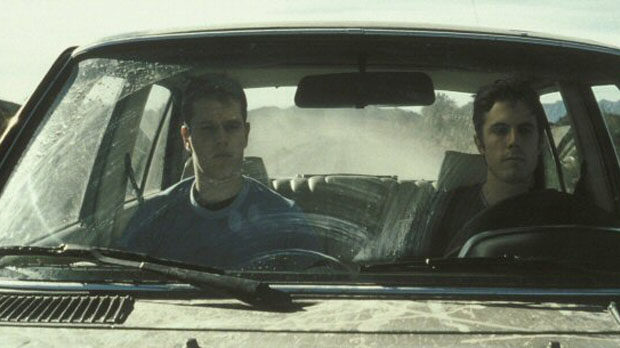
Unless you are a very serious basketball player — at minimum serious intramural league level, or one of those Wall Street guys who absolutely must blow off a ton of steam by playing their hearts out on the court or else they’ll absolutely lose their soul — there is a very distinct qualitative difference between what it feels like to play basketball for a while and to run for a while. After you finish playing basketball for a while you feel good, you’ve gotten some good cardio, but that cardio is intermittent, the game being filled with plenty of pauses and plays where you sort of lolled around in the low post, hoping you’d get the ball until you realized that you’re a Jewish 5’10” and you probably won’t be getting the ball in the low post anytime this century. You feel like you’ve exerted yourself, but that’s all.
After a long run, say four miles, there is a certain feeling of elation, a kind of blessed exhaustion that takes you through fatigue into someplace different and beautiful, to a muscle-exhaustion high. Basketball is fun; running isn’t. Running requires an exertion that is more consistent and less physically forgiving; so because you work more when running, the feeling of having completed the run is more rewarding. It takes you to a more tranquil place.
The first time I watched Gerry (pictured), at home on DVD as soon as it came out, I felt the same way I feel when I finish a run. In particular, that two-shot of Damon and Affleck’s faces as they walk, camera moving alongside so the composition of the frame barely changes, took me through the kind of mental fatigue that has its closest physical analogue on the track. It was dreadfully, dreadfully boring, but I refused to look away, I tried my hardest to keep my mind empty and clean, prevent it from wandering, looking at the image, unchanging as it was. After a while — I think that shot goes on for five minutes or so — I began to feel myself falling into an almost meditative state, like I was making it through a long run, to a tranquil place where my exertion had earned me some new level of mindfulness.
Now, if you’ve seen Gerry, and I imagine there’s a decent chance you have, Filmmaker Magazine reader, I’d ask you to imagine showing it to people you know who have no major desire for “art” cinema. How long do you think you could get them to sit through it? Five minutes? Ten? Maybe 13 or 14? Why do you think that is?
Manohla Dargis and A.O. Scott had a fantastic, if short, response to some disturbing attacks on works of art that demand our fullest attentions, recently. Dargis took particular issue with a recent New York Times Magazine piece by critic Dan Kois, which went into detail about how Kois is tiring from eating his so-called “cultural vegetables” (Solaris, Meek’s Cutoff), from challenging himself to be challenged by art. Scott’s response was more directed to Richard Schickel, who recently stated, in a review of The Tree Of Life, that cinema’s “best directors have stated whatever serious intentions they may harbor as ignorable asides” in their works, and ends up siding with the Depression-era art-as-escapist-entertainment-only-thank-you-very-much philosophy espoused by Sullivan’s Travels (although Mr. Schickel forgets that the philosophy of Sullivan’s Travels is a little more nuanced, that film trying to have things both ways). Coming to the defense of the “slow and boring,” as her title puts it, Dargis illuminates why a film might aspire to stop its viewers’ thought processes. “Thinking is boring, of course (all that silence),” Ms. Dargis writes, “which is why so many industrially made movies work so hard to entertain you. If you’re entertained, or so the logic seems to be, you won’t have the time and head space to think about how crummy, inane and familiar the movie looks, and how badly written, shoddily directed and indifferently acted it is.” Bravo! And yet, I thought certainly that Dargis was headed somewhere else entirely. As I read “you won’t have the time and head space to think about how crummy, inane and familiar,” I thought to myself, “life is — that’s where she’s going with this.” Ms. Dargis didn’t go there, but perhaps my own mind did because the novel I’m currently reading, in fact, does. From page 85 of The Pale King, by David Foster Wallace:
Maybe dullness is associated with psychic pain because something that’s dull or opaque fails to provide enough stimulation to distract people from some other, deeper type of pain that is always there, if only in an ambient low-level way, and which most of us spend nearly all our time and energy trying to distract ourselves from feeling, or at least from feeling directly or with our full attention…surely something must lie behind not just Muzak in dull or tedious places anymore but now also actual TV in waiting rooms, supermarkets’ checkouts, airports’ gates, SUVs’ backseats. Walkmen, iPods, BlackBerries, cell phones that attach to your head. This terror of silence with nothing diverting to do.
The sort of movies Dargis is describing function in the same way as the ubiquitous TVs and personal electric devices do in DFW’s description: for the length of their duration, they distract us from the boredom and pain and silence of existence, a silence and pain that can only be filled and turned into something meaningful not by watching Transformers 3 but by grappling with something big and meaningful and difficult and informing how you live your life and see the world due to that grappling. That’s the kind of experience that arises from pushing yourself outside your comfort zone, which can be done in any number of ways, one of which is experiencing art that challenges you and makes you work very hard. We’ll return to this later. First, I’d like to propose a theory as to why we have the recent spate of no-hard-work-for-me-please entreaties from serious critics like Dan Kois and Richard Schickel, which, by the way, are terrifying for a simple reason: if these guys — professional critics, people who earn their living writing about their responses to art (and Schickel something of a legend, no less!) — are unwilling to do the work, what the fuck does that say about the rest of us? And what does that mean for filmmakers who might like to try to just maybe, possibly, potentially, challenge the audience just a teensy-weensy bit in the future, if that would be okay with Messrs. Kois and Schickel?

This is a question that has terrified me before, and I have a theory as to why. We’re getting there, but first, another aside to help set this stage. It’s 2005 and I am a sophomore at NYU’s Tisch School of the Arts. I’m a film production major. In my Sight & Sound: Film class (an intermediate-level class all sophomores take in which you make 16mm black & white non-sync shorts) a young lady has just shown a short film which opens with various extras standing around a college dorm room, frozen in place mid-party, a la Last Year At Marienbad, the film that occupies yours truly’s #4 spot in my you-are-invited-to-participate-in-the-Sight-&-Sound-poll fantasy. The film — which seemingly begins as homage — quickly turns patricidal, ending with a character taking a perfectly fine DVD of Marienbad and breaking it(!). After the film, as per usual, the filmmaker got up to explain what went into her decision to make the work. She told us that she had been recommended Marienbad, watched it, and found it tedious to the extreme. “Oh well,” I thought to myself at the time, “you can’t win them all.” “Have any of you guys watched that movie?” the filmmaker asked us, her classmates. I raised my hand, one of three to do so in our class of perhaps 35. One of the other students who had seen the film remarked that he, too, thought “it sucked.” When I piped up — “I really like that movie!” — I (seated in the back row of the classroom) was greeted with about 35 derisive head-turns (this was my life’s most John Hughes moment, and trust me, I’ve had a few of those) and a snicker: “Yeah Zach, you would like that movie.” NYU students! Tisch Film! Isn’t this supposed to be the best film school in the world, filled with the brightest future filmmakers? Sensitive soul that I was, I lamented the milieu (“If my fellow NYU film students don’t appreciate work like Marienbad, who in my generation will, and what chance does that leave me to succeed with arty-farty* movies?” [*Not my exact words.]) after the fact to the class’s professor, who suggested that perhaps I should have gone to Cal Arts if I wanted a more artistic environment.
Of course, I went to school with a lot of kids who were really smart and really talented. I’m sure there are plenty of Marienbad-haters out there who have made great films, really great films. But I think being resistant to work like Marienbad, like The Tree Of Life, like Meek’s Cutoff, lessens an artist’s chances of making great work, not to mention an audience member’s receptivity to great art in general. So what’s pushing us in this direction as of late? Well, honestly, I think Google and your cell phone, to a significant degree.
Do you remember what life was like before Google? Before the internet? If I wanted to find the phone number for a restaurant, I would have had to locate the phone book in my house; if it wasn’t where my mom normally kept it, I’d have to ask her where she put it, and if she wasn’t home I’d have to call my dad at work or look around the house until I came across it. If I simply couldn’t find it and there was no food at home that I felt like eating, I would’ve had to walk to one of my neighbors’ houses and ask them if I could look up the phone number for the local pizza place. I probably would have to engage with that neighbor in some degree of small talk about how they were, how I was, how school was going. I would have had to exert effort. I would have had to challenge myself to deal with the frustration of looking for an object you can’t find, of trying to imagine where someone else might have left something, of interacting with another human being and accommodating their presence and existence. In the process of doing this over the course of a lifetime, one accumulates new experiences, strengthens one’s capacity for empathy, and becomes more comfortable going outside one’s comfort zone and learning about the world.
Today, I can Google practically any restaurant in the world and have its phone number in a matter of seconds. This creates a fundamental shift in how our brains work of epic proportions, and it’s too complicated to go into major detail with here, but if you’re interested in that shift you should read The Shallows by Nicholas Carr. The basic idea is that, being as plastic as it is, the neural network in our brains is changing due to our increased internet usage, strengthening the synapses that feed off of instant stimulation and weakening those that are necessary for sustaining one’s attention with regard to a specific task. So we seek cognitive experiences that will provide us with what we’re seeking immediately, rather than ones that may require more effort (yet have a far greater chance of stimulating self-growth). Does the distinction sound familiar?
Additionally, think about your cell phone. Think about the sound it makes when you get a new email or text message or an actual, honest-to-God phone call (apparently sometimes people still do this). It’s unbelievably thrilling, right? That sound is the sound of limitless potential, unyielding possibility, and, more often than not, the news that this pill will increase your penis size by 20%. The sound our phone emits when these messages come in is like the bell that goes off in a drug addict’s head when they score. When our phone goes off, we may be at work in the midst of a tedious task, or at lunch with a friend we see all too often, or at home waiting for the delivery from that restaurant you Googled to arrive. As soon as the phone rings, we are leaving that tedious setting for a place where you’re about to be stimulated in a very direct, very easy fashion. For the brief instant in which you open the phone and read the new message, be it spam or a friend’s invitation to a party or a text from a former lover, we forget about where we are in the world, we abandon our current surroundings and are entertained by a new set of possibilities regarding our lives. This abandonment of our real life lasts only momentarily, as we consider the message and its implications and then insert those implications into the pre-existing framework of our life accordingly, but the fact that the message only stimulates us for a moment does nothing to lessen our excitement the next time the phone beeps. We seek anything to distract ourselves from ourselves, from the other, deeper type of pain that is always there — the pain that comes from confronting our real life, our foibles and complications and failures and anxieties and unknown futures.

(Now, I’m not trying to argue that, were Mr. Schickel to pay assiduous attention to The Tree Of Life [and indeed, perhaps he did], he would confront the pain that would result from a confrontation with his own existence; rather, I’m saying that the constant deferring-away from real life in favor of the drug-like hits that come from a perpetual flow of texts, e-mails and calls brings us to a state where we are simply not equipped to do the work of confronting anything that requires sustained concentration, be it our own life’s problems or The Tree Of Life.)
So why, then, do people like Ms. Dargis and Mr. Scott and myself, and many other serious filmgoers, continue to subject themselves to films that are indeed very boring at times? (I saw Film Socialisme for the second time recently, despite the fact that my French is not good enough to catch more than a third of the film’s total dialogue. It was, indeed, very boring at some parts, and yet I felt enriched for having seen it, more so the second time than after my first viewing, despite the fact that I knew what was coming the second time, and so was even less “stimulated.”) The only answer that I can think of is that challenging films — like challenging works of art in any medium — do not leave you feeling empty immediately after their consumption, the way text messages or Hollywood movies do. We may be completely engaged during The Hangover Part II or an email about a party, but once the film is over, once the message is read, life returns to normal with a vengeance. We are alarmingly thrust back into the realization that, despite how stimulated we’ve just been, absolutely nothing about our existence has changed; we are just as alone, just as confused, just as desiring of stimulation as we were before we opened the text, before we walked into the multiplex. You could go from The Hangover Part II to X-Men: First Class to Thor all in one day without getting fatigued; the entertainments pass through you like water, or Heineken. It would be much, much, much harder to go from Meek’s Cutoff to The Tree Of Life to Film Socialisme all on the same day; indeed, that would be sort of absurd, as by the time you got to the third film you couldn’t expect yourself to digest any of the work properly. I use the word “digest” purposefully there, because great art needs time to sit around and be ruminated upon; if The Hangover Part II is water, Meek’s Cutoff is a giant cheeseburger. This is why you’re able to walk away from Meek’s Cutoff feeling elated, satisfied, in a way that’s impossible when leaving The Hangover Part II: Meek’s Cutoff pervades in your mind in the way that only great art can. You walk out of the theater into a different world, a world where you have been through something, challenged yourself, and yes, gone outside your comfort zone; this is, by definition, what you must do to grow as a person and enrich how you understand the world. There is no shortcut, Mr. Kois, Mr. Schickel: this is the only way we get there, through the trial by fire that very difficult art so often is. It’s the difference between basketball and running: from one you derive the greatest stimulation while it happens; from the other, the stimulation comes afterward, after the work has been done, when you realize how much has been given to you to digest and live and walk around with. Water is nice, but all the water in the world won’t give you the satisfaction a meal can. Take it away, DFW-from-1993-interview:
Showing the reader that you’re smart or funny or talented or whatever, trying to be liked, integrity issues aside, this stuff just doesn’t have enough motivational calories in it to carry you over the long haul. You’ve got to discipline yourself to talk out of the part of you that loves the thing, loves what you’re working on. Maybe just plain loves. (I think we might need windwoods for this part, LM.) But sappy or not, it’s true. The last couple years have been pretty arid for me good-work-wise, but the one way I’ve progressed I think is I’ve gotten convinced that there’s something kind of timelessly vital and sacred about good writing. This thing doesn’t have that much to do with talent, even glittering talent like Leyner’s or serious talent like Daitch’s. Talent’s just an instrument. It’s like having a pen that works instead of one that doesn’t. I’m not saying I’m able to work consistently out of the premise, but it seems like the big distinction between good art and so-so art lies somewhere in the art’s heart’s purpose, the agenda of the consciousness behind the text. It’s got something to do with love. With having the discipline to talk out of the part of yourself that can love instead of the part that just wants to be loved. I know this doesn’t sound hip at all. I don’t know. But it seems like one of the things really great fiction-writers do — from Carver to Chekhov to Flannery O’Connor, or like the Tolstoy of The Death of Ivan Ilych or the Pynchon of Gravity’s Rainbow — is “give” the reader something. The reader walks away from the real art heavier than she came into it. Fuller.