Back to selection
The Blue Velvet Project
Blue Velvet, 47 seconds at a time by Nicholas Rombes
“Blue Velvet Project” Creator Nicholas Rombes
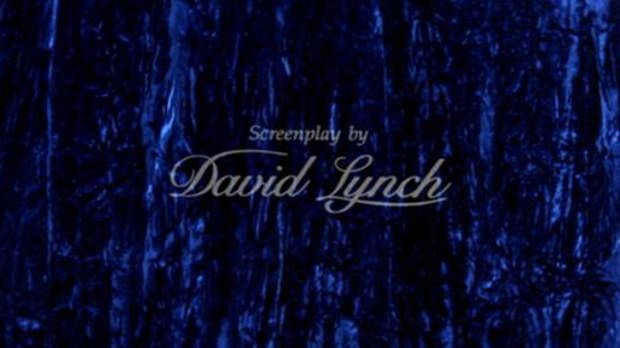
One year ago, Nicholas Rombes proposed “The Blue Velvet Project” to me at Filmmaker. For 12 months, three times a week, he would scrutinize a single frame from David Lynch’s modern classic, looking both inside and outside of its aspect ratio for correspondences, allusions and meanings. For Rombes, it would be another in his “time-based” critical film essays — appropriately so, for it was because of another of these columns, 10/40/70 at The Rumpus, that I discovered his writing in the first place. (In fact, I interviewed him previously about this other fascinating project.) Nick had contributed to Filmmaker before — I particularly liked his “Into the Splice” columns, which examined a film by way of its viewing circumstances — but through its severe focus and long-term commitment (152 posts!), “The Blue Velvet Project” would be on a whole other level.
I will confess to saying “yes” to this project while harboring a smidgen of skepticism. As someone who sometimes struggles to come up with thoughts for my weekly newsletter, I wondered if Rombes would find that much to say about Lynch’s film, if he could sustain such a pace and see the project to its conclusion. But in short order, these concerns vanished. Rombes’ entries have been wonderfully written and wildly allusive. Drawing from poetry, art, photography, politics and theory, Rombes engaged deeply with not only the meanings of Blue Velvet but its legacy. For me, the project soon became something outside of my job as Editor here at Filmmaker. Indeed, the highest compliment I can pay these sublimely thoughtful and pleasurable posts is that they transformed me from that Editor into, simply, a reader, a fan. Each Monday, Wednesday and Friday I’d look forward to Rombes’s pieces, enjoy tweeting about them, and would, many times, delve myself into the references he expertly uncovered in each one.
I’m sad the project is over — its final post is today — but happy that Nick took a few moments to discuss it in our interview below. We talk about the project’s influences, why Blue Velvet is an important film for him, how he physically wrote the posts, and the various other film critics exploring similar avenues. And now that the project is over, why not read it all the way through? Here’s a new link that orders the posts in sequence.
Filmmaker: Is the Blue Velvet of August 2012 the same Blue Velvet it was to you in August 2011, when you started this project?
Rombes: No, I would say not really. One of the things I had hoped would happen did happen: the random stopping of the film every 47 seconds made important whatever was stopped on. You had to write about it, had to think about it and look for connections. And sometimes those were the spots in the film that, as a viewer, you tended to forget or suppress because they’re really not part of the narrative drive of the film. So it’s a different film in the sense that I appreciate much more deeply those “transitional moments”—those beautiful down-times that all good films have that are really important to making the up-times stand out. [Those moments] are really prominent in my mind when I think about the film, whereas they weren’t before.
Filmmaker: Before you started the project, did you think of certain influences or references that would echo throughout the series, or was it, as you just said, all spontaneous?
Rombes: There were a few grounding things. I was inspired by and definitely knew I would use Laura Mulvey because I was very interested in the whole idea of the gaze. She has a book that’s a few years old, Death 24x a Second, which is also about freezing and looking at frames. I needed a few anchor points so that [the project] would not be completely random, and she was one. [Roland] Barthes was another one, of course, with “The Third Meaning,” that great essay of his where he slows down The Battleship Potemkin and looks at the stills. You take a still out of a film and freeze it, and it’s not a part of a film and it’s not a photo; it’s a third thing, which is very elusive. That was really important in my thinking, and I knew I wanted to return to him. So those were the two main [influences] I knew I would quote, but I didn’t know I would go into the poets. I had no plan from the beginning of bringing in Brigit Pegeen Kelly or Roberto Bolano or those sorts of folks. In the beginning, I thought [the series] would be mostly theoretical, but I found that a lot of the fiction and poetry I was reading was sort of what we would call “theoretical” in a way. It was offering a theory of the world, of reality and how we fit memory into it. So those sort of morphed in, in real time, whereas Mulvey and Barthes where definitely there from the beginning.
Filmmaker: There is film theory and literature in the project, but also politics and psychoanalytic criticism.
Rombes: Yeah, and I should definitely mention Reagan. It was such a formative time for me personally when I first saw the film that I was very curious to see what Reagan was saying [at the time of its release]. What was the tone of the country, officially, at that moment? So I knew I would bring that in too.
Filmmaker: What was your process for actually doing the column each day? Did you pull all the screen grabs at the beginning of the project and just open up the next one on your list? Or did you advance your DVD for each post and pause after 47 seconds?
Rombes: There wasn’t really a method other than the fact that at the beginning of the project, my wife, who’s a math teacher, did this algorithm where she broke down exactly every 47 seconds, and what that second would be in the film. They were on an Excel spreadsheet so I would know exactly where to go for the next 47 seconds. Although I would generally just watch until that point.
Filmmaker: Did you write the entries one by one, or several at a stretch?
Rombes: Sometimes I would bank them up. I would do, at most, two or three in advance, though I would always go back and edit them. More often than not, I would do them a day or two before, and, on occasion, the day of. Sometimes those turned out to be the best ones — the ones that I didn’t think a lot about and wrote completely intuitively and under that deadline. But I don’t think I ever did more than two or three in advance. I think when I proposed the project to you I thought I would get a good month’s head-start. I just never did, so it was a little more spontaneous. I think that allowed me to pull in what I reading and other movies I was watching at the time. So it kind of reflected almost a real-time [sensibility]. When [an entry] was posted was very close — within a day or two — to when it written.
Filmmaker: What about this project viewed within the context of all of your different projects involving film criticism and different ideas of film time? Someone might find these various time-based critical pieces very similar, but it seems to me that they vary greatly depending on the specific duration of time you choose for each one.
Rombes: So much great film criticism from the pre-digital era is based on memory. Bazin and others would say, “I saw this film two years ago and I’m going to write about it as best I can.” I’ve been really interested in the way that digital technology gives us absolute control the same way we have always had over a book, in that you can go back to it over and over again. Maybe it’s something I never got over as someone who started teaching film when you needed a projector and it was so difficult to get the actual films. When DVDs came out, and streaming video, and the ability to own films and freeze them, that really opened up a new way of looking at film, and it changed our relationship to film time. We have taken back control. So that’s something that I think runs through all the projects—exploiting to its maximum potential the ability to seize back film and not be, in a sort of Marxist way, “under its spell.” Or, to break its spell without breaking our love for it. To even love it more. That’s really, for me, the common thread: using this technology and exploring what else we can do besides putting extras on a DVD. What else can we do in terms of film theory or scholarship to seize back the film?
Then, on the other hand, is the countervailing measure, Sontag’s notion of “against interpretation,” this very anarchic view of the interpreter as the one who is sort of the fascist, imposing his or her view on the film. I love the fact that the randomization that runs through the 10/40/70’s and Blue Velvet Project in a sense breaks that, because you don’t know what you’re going to get. You’re still interpreting but you are no longer the authority; you are beholden to the film. So at the same time you have more control over the images and the technology, and you master it, you are also beholden to it in a way because it’s showing you something unexpected. And maybe those are the two views that really excite me when I think about this new form of writing that not only me, but many other people are working on as well.
Filmmaker: Who are some of the people that you view as colleagues in this approach?
Rombes: There is Chuck Tryon down in Fayetteville, who is doing some interesting things with this. I think a lot of [critics] — David Bordwell and some of the big names — do this in a different way. I admire them deeply and have learned so much from them. But they seem to have appropriated the technology to perpetuate the old ways. They use the availability of cinema in order to forward theses I think they already had. It’s like, “Great, we have more evidence.” But there’s another group that’s on the margins— Adrian Martin and Girish Shambu and Dan North. They’re almost more in the blogosphere. Catherine Grant, who hosts “Film Studies for Free,” does a lot of this herself, which is to let the film itself direct you without giving up the critical distance, without letting yourself become just a fan. So it’s almost a split in the way that the technology is used in terms of theorizing film.
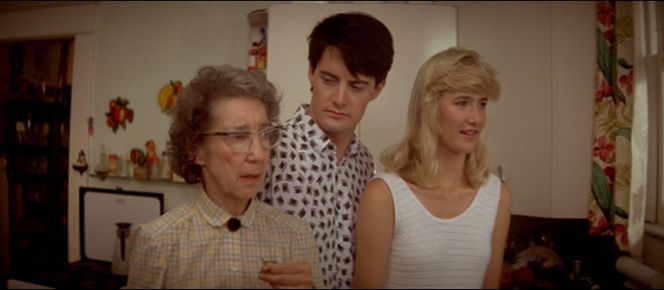
Filmmaker: There is a big difference between this project and 10/40/70. In 10/40/70, the great majority of the film is not able to be referenced. Whereas in this project, which pulls from every 47 seconds, probably every scene in the film is cited.
Rombes: Right. There’s a certain point where you are either a creator of creative content—and I’m speaking academically, I guess—or you are a critic of it. I think 10/40/70 and Blue Velvet, but especially 10/40/70, almost tip into the realm of “you now are a creator.” Especially with 10/40/70, there is nothing objective about that; it’s completely random. What you’re going to reveal about the film almost verges into a creative piece rather than a critical piece. I think we’re still stuck with using those terms, in some ways, because we both know that creative work can be critical and vice versa. What I really like about this new movement to give up authority is that you end up allowing for the creative. In my experience, in graduate school, you were really taught to suppress and to keep underground the creative. So I really like that idea of, what is it that you are doing? Are you doing film criticism or are you doing poetics that relies on the film to create something that is really not criticism but could hopefully stand on its own with its own assemblages and connections.
Filmmaker: Let’s talk about the commitment you made to do the project. In retrospect, it seems like a huge commitment to write at this level three times a week for a year. Were there ever times you were ruing the day you pitched this?
Rombes: Maybe once or twice, sure, when life intrudes, as it does, and mixes it up. But I will say two things: one is that if I had written it for another place, I don’t know that I would’ve continued. What I think is unique about Filmmaker is that it ranges from director interviews to very technical interviews about funding to really interesting theoretical takes on things. I always perform better under pressure and the expectations of an audience, and I felt a pressure. Part of it was not wanting to disappoint you or anybody at Filmmaker by having it fall flat. It was, this is Filmmaker and I have an opportunity to write for Filmmaker and I’m going to do the best I can do. That was one part, but the other was that there was something almost selfishly therapeutic about it. The steady dose of deadlines, three times a week, no matter what — they were unchanging in a life that has constant changes. So it was a mix of those two things that made me never really question my commitment to the project. And some of the pieces I would spend hours after I had written them editing and changing to get the tone that I had wanted right.
Filmmaker: That is really great of you to say. And likewise, I’m not sure what I expected at the beginning of the project, but as it went on I was just stunned at how great the posts were, day after day. I’ve seen other people make long-form commitments to online projects and have watched those commitments evaporate when they’ve lost interest or gotten overwhelmed by other work.
Rombes: Another thing is that I could do them rather than submit them. The access you gave me [to the CMS], saying, “Here’s the password, come on in,” was a great incentive. It seems like a small thing, but it is huge if you are a writer. I could basically lay them out and design them. [Managing Editor] Nick Dawson, who was very nice, would only a very few times email me and say nicely, “Oh, hi, I think you have this sentence incorrect.” I was very grateful when he did that. But other than that, it was very pure. The fact that I didn’t have to submit them and wait and have someone say, “Well, we’re off this week…” I loved the design and block quoting and figuring out the image size — even though the graphic and web design part of it was very minimal, I’d always look forward to that part of it as much as the writing.
Filmmaker: So a final, obvious question: Why Blue Velvet for this 47-seconds approach?
Rombes: It’s so personal. A college professor recommended it to me. I was really naïve and I hadn’t seen much. I was from the Midwest and I did not grow up in an “art” or “avant-garde” environment. I grew up in the “blockbuster” environment. We all have those films that we see at the right moment. I saw Blue Velvet first on VHS, and it stuck with me as many years went by. I think it was because it was very difficult to detect the tone of the film. Was it ironic? A parody? How sincere was it? Whose worldview in the film are you supposed to attach yourself to? What are you supposed to do with the radical shifts in tone from humor to violence? Even though years went by before I saw it a second or third time, it really rattled around. So it was the film I wanted to go back to, to try to answer those old questions for myself. What is the basic worldview of this film? What is its sort of ideological stake in the world? I suppose that, more than anything else, is why I went back to it.
Filmmaker: For me, Eraserhead was almost that. I remember seeing it two weeks into my freshman year at Columbia in a midnight screening on the Upper West Side. But you didn’t see Blue Velvet initially in the theater?
Rombes: Yeah, this was just when video stores were opening in the Bowling Green area. I had missed it on the big screen but in ’87 it was out on VHS. And the professor who introduced it to us, he just stopped in class one day and said, “I broke up with my girlfriend. She was the love of my life and a week before I knew it was going to happen. I went out to a barn on her farm in the middle of the night to find her, because that was where we met. And when I opened the door, by a gaslight there was her father butchering a pig. He looked at me as he was taking out the heart of the pig. He looked at me in the flickering light, our eyes met, he didn’t say anything but he put the heart down and continued butchering the animal on the table.” And then he said to the class, really dramatically, “That was my heart. That was my heart. That was the heart and I knew I would never see his daughter again.” And then he said, “Oh, and you have to see Blue Velvet.” So he set up this mystique right away, and that was so much a part of the context — I can never think of the movie apart from that. So much of our memories of these films are associated with specific moments. The trick is to write about them without nostalgia but also without losing the beautiful humanity that comes with these personal memories and to somehow speak to others who have had a radically different experience with a film. It is interesting how those are the motivators often — not just the film but the moments that happen around the film.