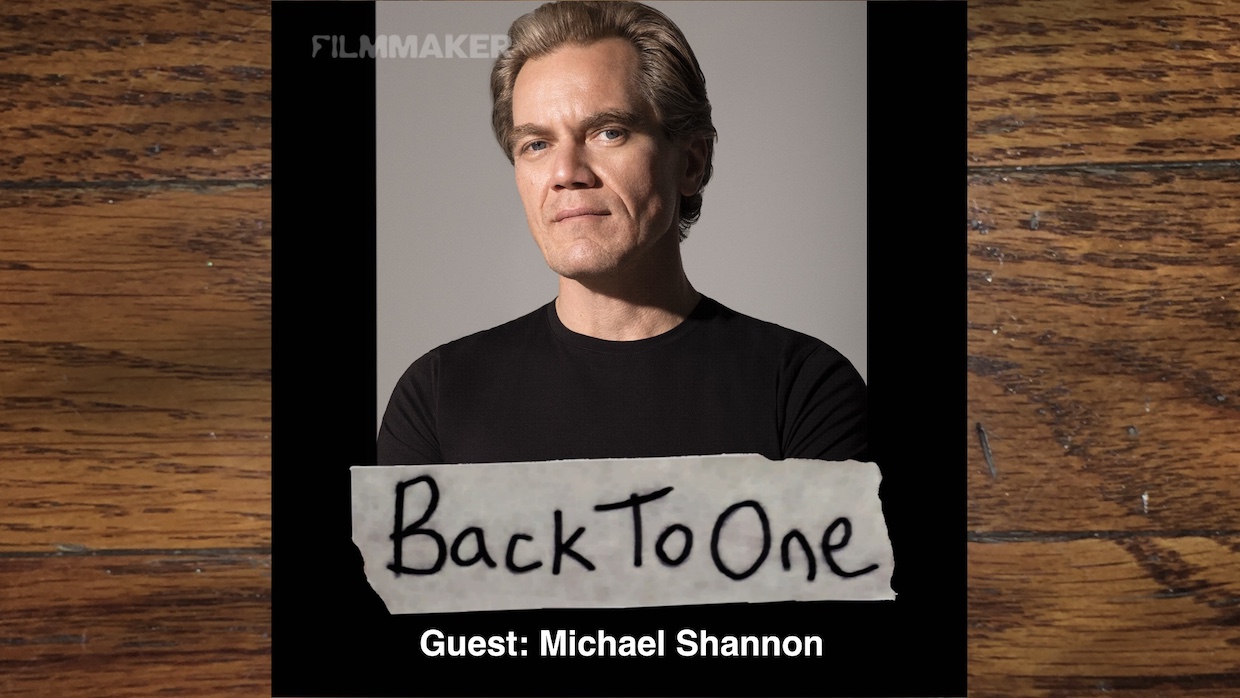
michael shannon

LIZA JOHNSON, “RETURN”

By

Wednesday, February 8th, 2012

A low-key drama that articulates the ennui of a returning servicewoman after a tour in the Middle East, Liza Johnson’s Return strikes a delicate balance between familial melodrama and suffering vet pic. Light on exposition and heavy on expert thesping, it features a striking performance by Linda Cardellini, once the most sly and attractive of the awkward high schoolers on Freaks and Geeks, and now a fully mature screen actress making the most of her copious talents. We meet her character Kelly at the airport, freshly arrived in Ohio after a stint in an unnamed theater of war, and only slowly begin to understand the broad disconnect she has with her plumber husband (Michael Shannon) and two young girls.

Unable to adjust to life at home, she doesn’t exhibit the classic PSTD symptoms, but an underlying sense of purposelessness and dissatisfaction overcome her in their modest house and at her job in a warehouse. As her indulgences in swearing, drinking and loud rap music grow into a larger inability to maintain social affability in nearly any context and her awareness of her husband’s activities in the year she’s been away comes to fruition, Cardellini’s Kelly must figure out whether there is any longer a home to be salvaged, or simply a place as alien as the desert she may secretly yearn to get back to.

Helmer Johnson is a multi-dimensional artist who has worked as a professor and curator while making a series of acclaimed short films. Her short film South of Ten was the opening night short at the 2006 New York Film Festival, and her gallery work and installations have been exhibited at MoMA, the Walker Arts Center and the Centre Pompidou as well as major European film festivals such as the Berlinale and Rotterdam. Her feature debut Return, which had its world premiere at last year’s Director’s Fortnight in Cannes, opens this Friday.

Filmmaker: A lot of your short work features non-actors. How did the experience of working with trained performers alter your working methods?

Johnson: For the last five years … Read the rest

THIS IS WHAT THE (OBSCURE) MOVIES DID TO ME IN 2011

By

Thursday, January 5th, 2012

They moved me. Often deeply, in ways I failed to articulate to myself until much later. That is, of course, the whole reason I go to the movies, to have some sort of visceral, emotional (or intellectual) response, be it laughter or sadness or pain or empathy or disgust or profound understanding. Why else do it? Nothing, beside having those emotions, meets the criteria of entertainment, at least for me. See, I’m one of those lucky few that gets to travel the world just to see films. Crazy, I know, especially in this era of not so cheap oil, but it’s what I do and I love it. The consequence of this somewhat amazing vocation (calling it a career is bullshit, at least for people of my generation) is that you can become jaded and sullen, you can lose your sense of expectation, of wonder. These are the movies that reinforced those cherished feelings within me.

Xavier Beauvois’ Of Gods and Men (1/5/11, 8pm, Sony Screening Room at a press screening) was the third film I saw theatrically in 2011 (the first was Abel Ferrara’s Go-Go Tales, on a wintery night in a nearly empty Anthology Film Archives, with an ex-girlfriend whom I no longer talk to). Tales of Christian sacrifice, of affability and goodness in the face of evil and death aren’t exactly the type of thing that gets jaded critics all riled up, but Beauvois’ patient, quietly devastating film about a cloistered circle of French monks serving an impoverished Algerian hamlet as Jihadists plot their demise struck a chord with me, Anthony Lane and that noted gay Catholic, Andrew Sullivan. I wasn’t quite blinking at tears, but I couldn’t shake its grand themes, its incredible “last supper”/singalong scene and the utter tragedy of its final frames. It did to me what cinema ought to do: refresh one’s sense of the world by introducing you to a circumstance, a culture, a series of choices, that one had not, up until that point, considered fully.

Another film that moved me in ways I didn’t see coming: Park Jung-Bum’s … Read the rest

MY 10 FAVORITE MOVIE MOMENTS OF 2011

By

Saturday, December 31st, 2011

As 2011 comes to a close it’s time to look back on the year in movies. It’s always tough for me to come up with a yearly best movie list because I never feel I’ve seen everything by Jan. 1. By this time of year I’m still trying to finish watching the award contenders (still on my list: Hugo, War Horse, Moneyball, Tinker Tailor Solider Spy, The Help).

So here are 10 movie moments from 2011 (in no particular order) that have stayed with me.

“I Want You To Help Me Find A Killer of Women”
I know you’re probably tired of hearing this line as it’s in all the TV spots and trailers for David Fincher‘s The Girl With The Dragon Tattoo, but after seeing the movie there was no better moment for me than when Mikael seeks out Lisbeth for her help. The look Rooney Mara gives after hearing this line gave me goosebumps. Seeing close to an hour how this woman goes through horror after horror, she is almost broken out of a spell when she hears these words. It’s a testament to the story structure and performances that even through I knew the line was coming I still felt such a jolt.

Hands Diry
If you went into Nicolas Winding Refn‘s Drive expecting a Fast and Furious-like hot rod thriller you were disappointed. But what you did get were moments of unexpected gore. The hotel scene I’d put up there as one of the most graphic I’ve seen in a while. And what makes it work is to that point Refn has lulled you with sparse dialogue and an amazing soundtrack. Then, suddenly, Christina Hendricks no longer has a head!

It’s The End of The World As We Know It
Melancholia‘s opening sequence has been analyzed since its premiere at Cannes, and for good reason. A foreshadowing of the horror to come, Lars von Trier brings beauty to the end the world with astounding cinematography, digital effects and, of course, Richard Wagner’s Tristan and IsoldeRead the rest

2011 IN FILM: A DISASTER ODYSSEY

By

Tuesday, December 20th, 2011

For many supposedly serious cinema folk, there is no secret pleasure more pleasurable than the disaster film. What makes the genre so familiar – predictable plotlines, one-dimensional characters and an ever-present threat that only kills the people who deserve it – is also what makes it so damn fun. In the late ’90s, people cheered when the alien spaceship blew up American monuments. A full decade after September 11th, it’s still hard to imagine that happening now. During the past decade, disaster films have become more serious, less The Towering Inferno and more District 9, but it is only in the past year that the genre started to evolve into something entirely unexpected. In 2011, disaster was back, but this time? It was seriously good.

During several interviews about Contagion, his globe-trotting, virus-chasing thriller  (pictured above), Stephen Soderbergh openly referred to it as his take on Irwin Allen,  the master of disaster behind The Poseidon Adventure and The Towering Inferno, but unlike Allen, Soderbergh refuses to privilege one character over another, giving the same amount of screen time to the hero who saves the day as he does to a girl who just wants to go to the prom. A macro look at the micro response of human beings to a global crisis, Contagion is a relentlessly paced movie that feels as ruthless as the amoral virus at its center.

The derivative that threatens to take out the firm at the heart of Margin Call may be as ruthless as the virus in Contagion, but unlike that virus, it is not some fluke of nature. It is a threat designed by the very men now in charge of dealing with it. Set over the course of one very,very long night, Chandor’s debut never resorts to reactionary, easy criticism of the firm’s employees. He knows that at the heart of any failed system there is not just culpability but also humanity – that it’s not villains who create these problems but human beings. The result is a film that is as serious as it is entertaining, and far and away the smartest … Read the rest

THE STORM WITHIN: JEFF NICHOLS’ “TAKE SHELTER”

By

Friday, November 25th, 2011

Originally published in the Fall 2011 issue. Take Shelter is nominated for Best Feature and Best Ensemble.

As I write this introduction the financial press is buzzing about the BBC appearance of a trader, Allesio Rostani, who flatly stated, “I’m dreaming of a global recession.” He says he hopes — and expects — the world economy to crash. If it does, he’ll make a lot of money because he’s short the Euro and various European government bonds. There’s speculation that he’s a member of the political prankster group the Yes Men, not because of the substance of his commentary (there are other market analysts who’d say the same thing) but because of the almost gleeful way he described profiting from the misery of others.

Schadenfreude may be intemperate on morning financial shows, but without it there wouldn’t be much of a movie business. Horror films, reality TV and even comedies (see last year’s Coen brothers film, A Serious Man), for example, depend on our voyeuristic fascination with the pain of others. But in most cases, that pain’s cause is both external and slightly fantastic — a monster, a serial killer, or, in the case of Soderbergh’s Contagion, a virus.

Jeff Nichols’s Take Shelter — for my money one of the best films of the year — starts off like many such thrillers, but its depiction of psychic distress is, ultimately, a rewardingly compassionate one. Curtis (Michael Shannon) is an ordinary guy, a construction worker with a beautiful, caring wife (Jessica Chastain) and young daughter (Tova Stewart). But, reminiscent of Richard Dreyfuss’s Roy Neary in Steven Spielberg’s Close Encounters of the Third Kind, he’s plagued by troubling visions. In his case, they are apocalyptic nightmares, and instead of leading him to beneficent space aliens they send him on a journey into his own mind. Schizophrenia runs in Curtis’s family and his visions are most likely the product of not only family history but the anxiety created by our perilous world economy. (I say “most likely” because in his young career Nichols already knows how to use ambiguity for … Read the rest

“TAKE SHELTER” — A HAMMER TO NAIL REVIEW

By

Thursday, September 29th, 2011

(Before world premiering in the dramatic competition at the 2011 Sundance Film Festival, Take Shelter was picked up by Sony Classics. It went on to win the Grand Prize at Critics Week, as well as the FIPRESCI Prize, in Cannes. It opens theatrically in New York City and Los Angeles on Friday, September 30, 2011. Visit the official website to learn more.)

[***DISCLAIMER: I am very good friends with several of the key collaborators involved with the Take Shelter production. Ordinarily, I would absolve myself from writing a review based on far more tenuous connections, but in this particular case, I can’t help myself. I’m fully confident that I would feel the exact same way if I didn’t know anyone associated with the making of this great movie—see: above awards; read: other glowing reactions.***]

When it comes to the movies in 2011, the end of the world seems to be on everybody’s mind. At the 49th New York Film Festival alone, at least three of the main slate selections are about the planet’s last days: Lars von Trier’s Melancholia, Bela Tarr’s The Turin Horse, and Abel Ferrara’s 4:44 Last Day On Earth. It’s a shame, then, that the very best one of them all, Jeff Nichols’ Take Shelter, wasn’t included in the NYFF program. Perhaps its September 30th release date precluded it from making the cut? Let’s just assume that’s the reason and move on.

Take Shelter is a modern American masterpiece. Nichols’ fusion of everyday, real world concerns with a classical approach to storytelling and cinema does more than just distinguish him from the rest of his peers. While he displayed a confidence and control in his pitch-perfect debut feature Shotgun Stories, Take Shelter finds Nichols working on an altogether more accomplished level. In light of Hurricane Irene—to name just one recent natural calamity—and the continually shrinking economy, this film couldn’t be timelier. (On a sort of side note, distributor Sony Classics has proven to have trouble reaching mainstream audiences with the [non-Woody Allen] American narratives it has picked up in the past … Read the rest

“TAKE SHELTER” | writer-director, Jeff Nichols

Monday, January 24th, 2011

[PREMIERE SCREENING: Monday, Jan. 24, 3:00 pm -- Eccles Theatre]

The biggest surprise associated with the making of Take Shelter was, without question, Jessica Chastain. When traveling the festival circuit with my first film, Shotgun Stories, I was fairly outspoken about the fact that Michael Shannon is one of the greatest actors working today. When casting Take Shelter, a film that is anchored by the relationship of a married couple, the biggest question I had was: “What actress could go toe-to-toe with Michael Shannon?” Then the universe delivered me Jessica Chastain.

When thinking about this role my executive producer, Sarah Green, was nice enough to arrange a meeting for me with Terrence Malick, a personal idol of mine, in order to discuss an actress I knew nothing about. Mr. Malick told me Jessica Chastain was one of the best actors he had ever worked with. Needless to say, I didn’t take this referral lightly. So much so that I never actually considered any other actors for her role. If it works for Malick, who am I to question?

So I go into production with an actress I had only met once. We had spoken on the phone a few times, but for the most part I felt I was in uncharted territory. Then I got to watch her performance. After that, I got to edit her performance. At the end, I realized it wasn’t just the fact that Jessica could go toe-to-toe with Michael Shannon, but that she filled the role so honestly and completely. For an actress I had never seen act before, this was a wonderful surprise.… Read the rest

“THE MISSING PERSON”

By

Tuesday, April 13th, 2010

It’s hard to go head first into film noir and not regurgitate the themes, styles, dialogue and characters from the past. But Noah Buschel in his latest cleverly dances around the genre to tell a story of a man who’s hit rock bottom and how he unknowingly redeems himself.

Set in the modern day, Michael Shannon gives one of his best performances in a budding career as a gifted character actor with his portrayal as sauced Chicago private eye John Rosow. When we meet Rosow he’s extremely hung over and gets a call to do a job tailing a guy with little information on why but for a lot of money. Given instructions by the attractive Miss Charley (Amy Ryan), Rosow is onboard a train to L.A. As his job continues he begins to learn more on why the guy he’s following is so important and why he’s the best man for the job.

Okay, that sounds like all the noirs you’ve ever seen in your life.

But instead of following Rosow as he stumbles upon clues and inevitably shows he’s a much better detective than the bad guys gave him credit for, Buschel keeps the plot at bay for most of the film, instead concentrating on the complex Rosow and exploring how he got to where he is now. And Shannon makes this exploration a joy to watch; grunting, slurring and cracking wise through most of the film, he makes Rosow out as a guy who’s seen it all and has had enough of the job but can’t think of anything better to do. Think of a much more disturbed Harry Caul from The Conversation.

The mood is also set by the top notch work by d.p. Ryan Samul, and the predominant jazz score. You can almost smell the stale cigarettes as the music comes in when Rosow enters a bar.

There really is no grand villain in The Missing Person or sultry femme fatale, we’re in a world “beyond right and wrong,” as Rosow puts it in the end. A place where getting by is the only … Read the rest

“THE MISSING PERSON”‘S NOAH BUSCHEL By Alicia Van Couvering

Monday, January 19th, 2009


Noah Buschel’s The Missing Person stars Michael Shannon, last seen as the asylum-bound neighbor in Revolutionary Road, and if Sam Mendes had directed this film, he might have played it straight, disregarding the minefield of clichés to pay reverent homage to The Long Goodbye; Buschel knows what a bold move it is to make a noir in 2007, so he subverts the genre with un-ironic simplicity and a few tall guys hitting their heads on the ceiling.

We meet Shannon’s character in his dungeon-like Chicago apartment. His cell phone is ringing; he’s a PI; he’s offered a lot of money to get on a train and follow someone to California. He drinks too much, generally, but the liquor isn’t filling the hole gaping open on his sleeve. As the case develops and winds its way through L.A., Mexico, and back to New York, he is forced to choose which side of this case he wants to be on. Instructed by his employer’s secretary (Amy Ryan) to obtain a cell phone with a camera, he spends much of the film learning to use it. Buschel (previously the director of Bringing Rain and Neal Cassady) wanted the film to play like a dream, he says, because sometimes movies that feel like dreams are more real than real life.

Filmmaker: The world of the film, especially visually, is very controlled. Can you talk about how you placed the film in time?

Buschel: Hopefully it all plays as sort of a dream, and feels like its own world. He’s sleeping in bed in the first scene, and I would like to think that we retain the possibility that maybe he never woke up, that it was all just a dream. [The story] is sort of about him wandering through his past, him wandering through his own mind. Those are my favorite kinds of movies, where you can see the story literally but also you could view it as a trip through the main character’s mind. Movies by Hayao Miyazaki, David Lynch, Terrence Malick, Hitchcock — The Conversation is like that, where it … Read the rest

JEFF NICHOLS, “SHOTGUN STORIES”

By

Wednesday, March 26th, 2008
DOUGLAS LIGON, MICHAEL SHANNON AND BARLOW JACOBS IN WRITER-DIRECTOR JEFF NICHOLS’ SHOTGUN STORIES. COURTESY INTERNATIONAL FILM CIRCUIT AND LIBERATION ENTERTAINMENT.

The North Carolina School of the Arts film program has, during its relatively short existence, produced a wealth of cinematic talent. Prominent alums includes writer-directors David Gordon Green, Craig Zobel, Michael Tully, Aaron Katz, Jody Hill and Nate Meyer, actors Danny McBride and Paul Schneider (who is also a writer-director), D.P.s Tim Orr and Adam Stone — and to that list one must now add another notable talent, Jeff Nichols. A native of Little Rock, Arkansas, Nichols graduated from the school in 2001 and has to date written and directed six short films in addition to working on Gary Hawkins’ The Rough South of Larry Brown (2002) and Margaret Brown’s Be Here To Love Me: A Film About Townes Van Zandt (2004). He currently lives in Austin.

Shotgun Stories, Nichols’ first feature, is a film with a classical feel that is nevertheless uniquely the vision of its writer-director. Set in Southeast Arkansas, where Nichols spent much of his adolescence, it is a small town tale of three brothers, Son (Michael Shannon), Kid (Barlow Jacobs) and Boy (Douglas Ligon), who are thrust into a feud when the father who abandoned them as children dies suddenly, and Son’s actions at his funeral incur the wrath of their four half brothers. Fusing together elements of classic tragedy, traditional American storytelling and epic cinema, Shotgun Stories is a poetic and powerful film which displays Nichol’s flair for creating vivid, original characters and intense and thoughtful narratives. Shot in 35mm anamorphic, it is a beautiful, expansive vision of America with a grandeur and grace that belies its limited budget.

Filmmaker spoke to Nichols about modern day revenge movies, the influence of Lawrence of Arabia, and his dad taking him to see Pale Rider in the second grade.

JEFF NICHOLS, WRITER-DIRECTOR OF SHOTGUN STORIES. COURTESY INTERNATIONAL FILM CIRCUIT AND LIBERATION ENTERTAINMENT.

Filmmaker: What was the genesis of Shotgun Stories?

Nichols: I come from a family of three brothers and … Read the rest

VOD CALENDAR

Filmmaker's curated calendar of the latest video on demand titles.
Contagion The Guard Hell And Back Again
See the VOD Calendar →
Filmmaker's Best Of 2011

Entries (RSS) and Comments (RSS)

The Filmmaker Magazine Blog is powered by WordPress.org.