Steven Soderbergh
Tuesday, December 20th, 2011
For many supposedly serious cinema folk, there is no secret pleasure more pleasurable than the disaster film. What makes the genre so familiar – predictable plotlines, one-dimensional characters and an ever-present threat that only kills the people who deserve it – is also what makes it so damn fun. In the late ’90s, people cheered when the alien spaceship blew up American monuments. A full decade after September 11th, it’s still hard to imagine that happening now. During the past decade, disaster films have become more serious, less The Towering Inferno and more District 9, but it is only in the past year that the genre started to evolve into something entirely unexpected. In 2011, disaster was back, but this time? It was seriously good.
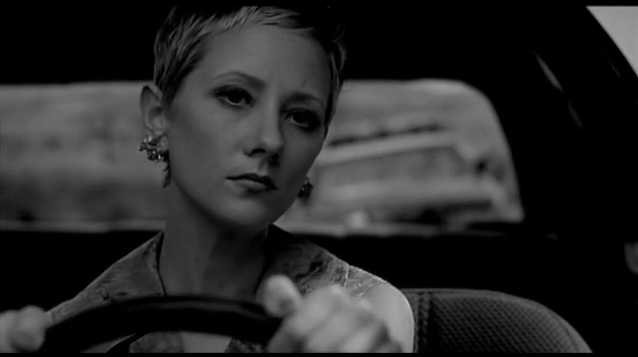
During several interviews about Contagion, his globe-trotting, virus-chasing thriller (pictured above), Stephen Soderbergh openly referred to it as his take on Irwin Allen, the master of disaster behind The Poseidon Adventure and The Towering Inferno, but unlike Allen, Soderbergh refuses to privilege one character over another, giving the same amount of screen time to the hero who saves the day as he does to a girl who just wants to go to the prom. A macro look at the micro response of human beings to a global crisis, Contagion is a relentlessly paced movie that feels as ruthless as the amoral virus at its center.
The derivative that threatens to take out the firm at the heart of Margin Call may be as ruthless as the virus in Contagion, but unlike that virus, it is not some fluke of nature. It is a threat designed by the very men now in charge of dealing with it. Set over the course of one very,very long night, Chandor’s debut never resorts to reactionary, easy criticism of the firm’s employees. He knows that at the heart of any failed system there is not just culpability but also humanity – that it’s not villains who create these problems but human beings. The result is a film that is as serious as it is entertaining, and far and away the smartest … Read the rest
1 Comment
Category News | Tags: Best Of 2011, Contagion, Hugo, J.C. Chandor, jeff nichols, Kirsten Dunst, Lars von Trier, Margin Call, Martin Scorsese, Melancholia, michael shannon, Steven Soderbergh, Take Shelter,
Monday, September 12th, 2011
Steven Soderbergh has dubbed Contagion his “Irwin Allen movie,” but if his pandemic thriller shares something with the films of that great creator of ‘70s melodramatic spectacle, it has more to do with financing and star power than emotional content. In Allen’s films, Hollywood A-/B+ royalty were introduced in varying stages of personal turmoil — crises that earthquakes, burning buildings or capsized ocean liners resolved in assorted manners (including that ultimate resolution, death). Despite their carnage, Allen’s films were humanist at their core.
Appropriately for our de-humanized, digital age, Soderbergh’s coolly professional film deploys real movie stars — you won’t see any of these folks on today’s version of Hollywood Squares — but within a film that embodies the efficient, remorseless intelligence of a disease itself. His cinematography (as “Peter Andrews”), Stephen Mirrione’s editing, and Clint Mansell’s score revisit the interlocking rhythms of the earlier Traffic, believably dramatizing the medical, political and social responses to a virus that quickly spreads to kill billions.
Yes, there are individual tales, but their emotional hooks are deployed sparingly, and mostly gracefully. (One key character’s death is both off-screen and presumed.) As Manohla Dargis alludes in her New York Times review, the film is also a rejoinder to anti-government Tea Party folks. While it makes nods to individualism and the free market — significantly, a key anti-viral breakthrough occurs not in a government lab but in a rogue private sector scientist’s — Contagion imagines a probable scenario that is inconceivable without a coordinated federal and international response.
I don’t think I’m spoiling anything by writing here that while some of the film’s stellar cast (Matt Damon, Gwyneth Paltrow, Marion Cottiliard, Kate Winslet, Jude Law, Lawrence Fishburne and Jennifer Ehle) die, the human race survives. As scary as Contagion is — and indeed, the film’s opening sequence following the virus as it transmits itself via a series of touched surfaces is absolutely bone-chilling — the film ultimately projects a kind of hopefulness, not by depicting individual heroics (although there are some here) but in simply imagining that we as a society can finally … Read the rest
Wednesday, December 22nd, 2010
In an interview with the L.A. Times, Matt Damon, currently shooting Contagion with Steven Soderbergh, says the director is seriously considering retiring from the film business within a couple of years. For anyone who watched the director’s world-weary interview in the extras to the Criterion Che set, this might not come as a surprise. Around the same time, he told Esquire that he wanted to retire by 51. In the L.A. Times piece, Damon elaborates on Soderbergh’s thinking with quotes that also provide a nice corrective to the indie-film bromide that “it’s all about the story.” For many of our best filmmakers, that’s simply not true:
“He’s retiring, he’s been talking about it for years and it’s getting closer,” Damon said of Soderbergh, whose credits include Erin Brockovich, Ocean’s Eleven, The Informant and Sex, Lies and Videotape. Soderbergh turns 48 next month, and if that sounds young, that’s the point, Damon said.
“He wants to paint and he says he’s still young enough to have another career,” Damon said. “He’s kind of exhausted with everything that interested him in terms of form. He’s not interested in telling stories. Cinema interested him in terms of form and that’s it. He says, ‘If I see another over-the-shoulder shot, I’m going to blow my brains out.’….
“After I worked with Clint [Eastwood] I went back and said, ‘Look, Clint is having a blast and he’s going to be 80 years old.’ And Steven says back, ‘Yeah, but he’s a storyteller and I’m not,’” Damon recounted. “If you’re an actor or a writer or someone working in film, it’s such a waste. For me, I’m going to spend the next 40 years trying to become a great director and I will never reach what he’s reached. And he’s walking away from it.”
… Read the rest
Tuesday, August 17th, 2010
How did I miss this article that came out in 2007? Conor Friedersdorf, filling in for Andrew Sullivan at his blog, linked to an old Vanity Fair article today as an example of “Slow” (i.e. long) journalism he especially likes.
I read the piece over dinner. Normally when I read an article that I think will be of interest to Filmmaker readers, I’ll offer a quick summary and then excerpt a couple of particularly interesting paragraphs that capture the flavor of the piece. When it comes to “Pat Dollard’s War on Hollywood,” by Evan Wright in the March, 2007 Vanity Fair, such an approach is impossible. I would have to quote every paragraph, so compelling and impossibly sprawling is this tale of Hollywood agent Pat Dollard’s journey from William Morris to the depths of cocaine addiction to the battlegrounds of Iraq to the studios of Fox News. Along the way there is a bizarre interlude in which art imitates life (when Dollard’s personal life echoes a film he produced, Paul Schrader’s Auto-Focus), several near-death experiences, a hilariously canny portrait of Steven Soderbergh, a lot of sex, and the smarmiest neo-con pick-up line you’ll ever read. Guest stars: agent Mike Simpson, Ann Coulter, Sheila Nevins, Billy Bob Thornton, and more.
For context, before you begin this very long but worthy article, you can view the trailer for Young Americans, the doc that Dollard has been working on for years, below.
… Read the rest
Wednesday, July 7th, 2010
Yesterday on the blog we asked what films inspired young viewers (in their 20s or below) to identify with the independent film movement. Here are responses from filmmaker, critic and Filmmaker Contributing Editor Brandon Harris.
Short Cuts (1993) – Saw it on cable TV sometime in 1994. I was too young to understand its significance at the time, but I believe it was the first American Independent film I ever saw. The fact that I watched it all at that age probably explains alot about me.
Clerks (1994) & Chasing Amy (1997) – Saw both of these during winter break, 1997. My older cousin David can still quote Clerks essentially line for line. My first prolonged exposure with American Independent cinema, the first time I can remember noticing a film’s low budget style. Probably introduced the concept of irony to me.
The Funeral (1996) – If only because one Saturday afternoon while I was watching it (certainly sometime in the summer of 98′) I decided I wanted to be a filmmaker.
Lone Star (1996) – To this day I can’t help but watch all of it whenever it’s on television. It was the first time I saw an American Independent narrative that seemed to deal with the ways in which different communities, even ones right on top of each other, see history in vastly divergent ways. Given how my home life was so different from the places I went to school, how the cultural disposition of my family and my school friends might as well have been worlds apart despite being contained within the same city and being essentially within the same class, I completely identified with its themes.
The Limey (1998) – Very similar to Pi in its importance to me (see below) – seeing it, theatrically, on a weekday, with perhaps two other people in an art house theater, one I would start working five years later, it spoke to me in a way few films (even ones which are much better) are capable of doing. Seeing it now is like visiting an old friend.
Pi (1998) – … Read the rest
2 Comments
Category News, Uncategorized | Tags: abel ferrara, Charles Burnett, darren aronofsky, John Sayles, kevin smith, Paul Thomas Anderson, Phil Morrison, robert altman, Steven Soderbergh,
Saturday, May 1st, 2010
A powerful statement from U.S. directors calling for the release of director Jafar Panahi from prison in Iran has been issued. I’ll let the petition speak for itself, but kudos to the organizers for taking action and assembling this illustrious group.
New York, NY (April 30, 2010) – Jafar Panahi, an internationally acclaimed Iranian director of such award-winning films as The White Balloon, The Circle, Crimson Gold and Offside, was arrested at his home on March 1st and has been held since in Tehran’s notorious Evin prison. A number of filmmaking luminaries have come to Mr. Panahi’s defense and “condemn his detention and strongly urge the Iranian government to release Mr. Panahi immediately,” according to a new petition. (Petition text and full list of signatories is available below.)
Islamic Republic officials initially charged Mr. Panahi with “unspecified crimes.” They have since reversed themselves, and the charges now allege that he was making a film against the regime, a very serious accusation in Iran.
Mr. Panahi’s films have been banned from screening in Iran for the past ten years and he has been kept from working for the past four years, but he continues to stay in Iran.
“Mr. Panahi deeply loves his country,” says Jamsheed Akrami, an Iranian-American film scholar and filmmaker, who helped organize the petition. “Even though he knows he could have opportunities to work freely outside of his homeland, he has repeatedly refused to leave. He would never do anything against the national interests of his country and his people.”
Mr. Panahi is one of the most heralded directors in the world. He has won such top prizes as the Silver Bear at the Berlin International Film Festival for Offside (2006), the Un Certain Regard Prize at the Cannes Film Festival for Crimson Gold (2003), the Golden Lion at the Venice Film Festival for The Circle (2000), the Golden Leopard at the Locarno International Film Festival for The Mirror
(1997) and the Cannes Camera d’Or for The White Balloon (1995).
PETITION: Free Jafar Panahi
Jafar Panahi, the internationally acclaimed Iranian director of such award-winning
… Read the rest
3 Comments
Category News | Tags: Ang Lee, Anthony Kaufman, Curtis Hanson, ethan coen, Francis Ford Coppola, Frederic Wiseman, Godfrey Cheshire, iran, Iranian cinema, Jafar Panahi, James Schamus, Jamsheed Akrami, Jem Cohen, jim jarmusch, joel coen, Jonathan Demme, Kent Jones, Martin Scorsese, Michael Moore, Oliver Stone, Paul Schrader, Paul Thomas Anderson, richard linklater, robert de niro, Robert Redford, Steven Soderbergh, Steven Spielberg, terrence malick,
Tuesday, April 20th, 2010

Now in its 13th year, the documentary-only Full Frame Film Festival (April 8-11) takes place in my hometown of Durham, North Carolina. The city of Durham is historically a tobacco town, moving slowly but steadily towards an uncertain future: while its tobacco warehouses are being converted to swank lofts, downtown office space is readily available with a seemingly high vacancy rate. The festival is very much a cultural cornerstone for the city, and as a result Full Frame means a lot to Durham.
As of late, however, Durham also means a lot to Full Frame: while in previous years the festival’s most visible sponsors were non-locals like the New York Times, HBO, and A&E (from which the festival still enjoys some support), the main sponsors today are local institutions like Duke University and the City of Durham itself. As a result, the festival has slimmed down from its 2005 incarnation, when Martin Scorcese came to town and the festival packed twenty more films into venues spread around downtown. Despite less sponsors, less films, and less screening venues, however, 2010 ticket sales were reportedly just as brisk, and most of the films I attended played to packed houses.
Having all 100 of the festival’s selections within walking distance makes it a more intimate affair, one where you’re likely to spot festival linchpins D.A. Pennebaker and Chris Hegedus eating lunch, watching movies, and standing in line with the rest of the patrons. The main screening venue, the Carolina Theater — the last of Durham’s original theaters, built in 1926 — also fronts a sizable courtyard perfect for milling about, provided the weather is nice (which it was this year), and as such Durham’s festival feels much more centralized and relaxed than many. And of course there is the much-vaunted southern setting and hospitality, which make Full Frame an important festival not just because it’s documentary-only, but also because it takes place in a city that, not unlike independent film, is figuring out its future on the fly.
Documentaries have what PBS’s Yance Ford referred to on a funding panel as a “demographic … Read the rest
9 Comments
Category Festival Coverage | Tags: And Everything is Going Fine, D.A. Pennebaker, documentary, Full Frame Film Festival, Kings of Pastry, Life Extended, Restrepo, Steven Soderbergh, The Player, Waste Land,
Saturday, September 12th, 2009
Even big time festivals goof up sometimes, Steven Soderbergh has finished his documentary on Spalding Gray and buzz builds for Tom Ford’s A Single Man.… Read the rest
Wednesday, March 11th, 2009
The Tribeca Film Festival announced their out of competition slate today. Highlights include world premieres of Steven Soderbergh’s The Girlfriend Experience (he showed a rough cut at Sundance), Cheryl Hines‘s Serious Moonlight, penned by her Waitress co-star and director Adrienne Shelley, a new Ti West horror, The House of the Devil, and the directorial debut of Eric Bana, Love the Beast. Full list of titles are below. The festival will run April 22 – May 3.
Encounters
Blank City, directed by Celine Danhier. (USA) – World Premiere, Documentary. Celine Danhier’s kinetic doc mirrors the urgent, anything-goes energy of her subject: the DIY independent film movement that emerged in tandem with punk rock in late ‘70s downtown New York. New interviews with a impressive array of artists including Amos Poe, Bette Gordon, Debbie Harry, Eric Mitchell, Jim Jarmusch, Lydia Lunch, Steve Buscemi, John Lurie, and Nick Zedd flow into clips from landmark No Wave films, and the still-thrilling music of the era floods the soundtrack.
City Island, directed and written by Raymond De Felitta. (USA) – World Premiere, Narrative. Vinnie just bailed out his illegitimate son from jail, his daughter’s moonlighting as a stripper, his son’s got a weighty fetish, and mom’s eye is wandering… the Rizzos might get along a lot better if they weren’t keeping so many secrets. Andy Garcia, Julianna Margulies, Emily Mortimer, and Alan Arkin star in this smart and poignant dysfunctional-family comedy, set in unassuming City Island.
Don McKay, directed and written by Jake Goldberger. (USA) – World Premiere, Narrative. Don McKay (Thomas Haden Church) should have followed the old cliche, “You can’t go home again.” After 25 years, he returns for the first time to his hometown at the out-of-the-blue bidding of his cancer-stricken ex-girlfriend (Elisabeth Shue). But a lot of time has passed, and an old secret crashes into new ones in this pitch-black comedy, also featuring Melissa Leo.
An Englishman in New York, directed by Richard Laxton, written by Brian Fillis. (UK) – North American Premiere, Narrative. John Hurt astounds as he revisits … Read the rest
Monday, September 29th, 2008

Jamie Stuart continues his series of shorts from the 46th New York Film Festival with an appearance from Steven Soderbergh and a chance encounter with a woman in distress… or is she?
Approximate running time: 6:02.
Download the short here by right clicking and choosing Save Target or Save Link. (35M)
Please visit Jamie’s site at www.mutinycompany.com.
To see all the videos in this series please go to
http://filmmakermagazine.com/nyff46.php. … Read the rest