Back to selection
11 Films and VR Experiences We’re Looking Forward to at the 2024 SXSW Film Festival
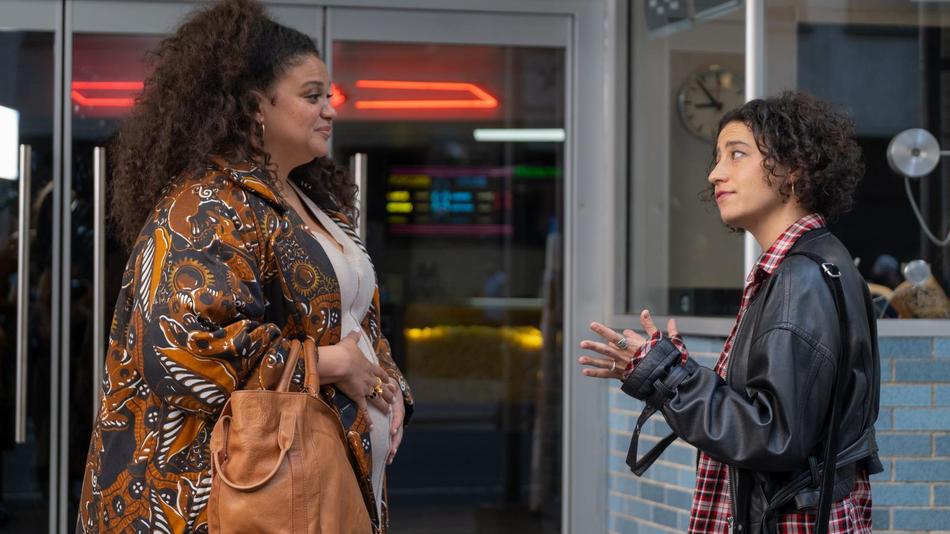 Babes
Babes With the SXSW Film Festival kicking off today in Austin, here are 11 works we’re particularly excited about and believe worthy of recommendation. The festival runs through March 16.
Babes. Actress Pamela Adlon, especially beloved by this writer for voicing the endearingly “not right” Bobby on King of the Hill, world premieres her directorial debut at this year’s SXSW. From a script by Ilana Glazer and Josh Rabinowitz, Babes charts the unexpected (and perhaps actively resisted) growth of chronically single woman Eden (Glazer) when she discovers she’s become pregnant from a one night stand. Desperate for direction, Eden immediately seeks out her best friend Dawn (Michelle Buteau), who already has a marriage and two kids under her belt. — Natalia Keogan
Roleplay. Plenty of — and perhaps too many — nonfiction films today borrow from dramatic storytelling, but that synthesis of documentary and drama is the productive premise of Katie Mathew’s feature debut, Roleplay. A group of Tulane University students collaborated with Mathews to create an immersive play drawn directly from their own experiences of, according to the press release, “sexual violence on college campuses, from the codes of silence, the isolation of people of color, the homophobia, the way Greek Life rules the social order, and the lack of guidance regarding issues like rape, racism, addiction, and trauma.” It’s a project that’s resulted in not only Mathew’s film but a co-authored play that’s being performed around the world. — Scott Macaulay
Immaculate. Hitting theaters via Neon the week after its SXSW world premiere, director Michael Mohan’s Sydney Sweeney-starring horror film is one to watch this March. Sweeney stars as Cecilia, a young American woman who travels to a remote convent located in the sprawling Italian countryside. Though her new home is picturesque in setting, her daily task of nursing fellow sisters in hospice begins to reveal a sinister energy housed in the centuries-old convent and the catacombs it was built upon. Even more terror and confusion arise when Cecilia, a life-long devout Catholic, discovers that she’s miraculously pregnant—but is this anomaly the result of the divine or the demonic? —NK
Resynator. Intending to make a short film about the synthesizer her dad invented, Alison Tavel wound up learning much more about her father, who died when she was ten weeks old. The resulting film, a feature, is Resynator, part music documentary and part the story of her coming to terms with her family history and the psychological factors that led her dad to abandon his electronic music dream. Interviewees include Peter Gabriel and Jon Anderson, and Tavel’s background is as an archivist for the Tom Petty Estate. — SM
Azrael. Simon Barrett, the horror screenplay scribe behind 2010s genre hits You’re Next and The Guest, returns in collaboration with director E.L. Katz (who previously directed episodes of popular horror series Channel Zero and The Haunting of Bly Manor) on a new tale of terror. The film follows titular protagonist Azrael (Samara Weaving, The Babysitter and Ready or Not scream queen) as she traverses a post-apocalyptic landscape after escaping a cult of mute zealots. Unable to evade recapture, Azrael is held prisoner while the cult prepares to sacrifice her to an eldritch horror. What they don’t expect, however, is for the young woman to do whatever it takes to claw herself to freedom. —NK
Desert Road. The directorial debut of Shannon Triplett, who has worked previously as a VFX artist, Desert Road develops its Twilight Zone-ish premise — a young woman wrecks her car on a desert drive only to be confounded by the morphing, temporally shifting world around her — into a suspenseful and surprising work of real emotional depth. Kristine Froseth (How to Blow Up a Pipeline, Birds of Paradise) is the stranded photographer, and her grounded performance is central to the work’s engrossing unspooling of surprises and dramatic hairpin turns. — SM
Astra. VR pioneer Eliza McNitt, who we featured in our print issue back in 2018, brings her latest mixed reality experience, Astra, to SXSW. Working with the immersive studio Albyon, the Spheres director continues her exploration in what she calls “the cosmic collision of science and art” with a work seen through the very personal lens of grief as she finds resonances in the cosmos of her experience processing the passing of her father. — SM
Timestalker. Writer-director-star Alice Lowe’s follow-up to Prevenge, her 2016 feature debut where she played a pregnant woman compelled to commit horrible acts by her demonic fetus, remains staunchly in the filmmaker’s zanily theatrical style. Taking place over seven time periods—including rural England in the late 17th century, Manhattan in the 1980s and a post-apocalyptic near future—the film follows Agnes (Lowe), a woman who finds herself falling for the same man every time she is reincarnated. While pursuing her eternal heartthrob only leads to trouble, heartbreak and, quite often, a grisly demise, she can’t help but seek him out century after century. Yet Lowe cleverly subverts tropes in both fairy-tale and period film conventions, suggesting that chasing a man has historically thwarted women from reaching their fullest potential. —NK
Secret Mall Apartment. Although some may find it unfathomable, well before The Last of Us the idea, “What if we lived in a mall?”, held a kind of ironic appeal. For eight Rhode Island twentysomethings in the early aughts, their infiltration of the Providence Place Mall and construction of a small but livable apartment out of architectural dead space resulted in pride, laughs and also a vantage point on the area’s surrounding gentrification. Director Jeremy Workman (Lily Topples The World) and executive producer Jesse Eisenberg have the receipts in the form of camcorder footage shot by the apartment dwellers, archival footage of the surrounding areas and plenty of present-day interviews that make Secret Mall Apartment much more than nostalgic prank documentation. — SM
If the Stars Had a Sound. Longtime Mogwai collaborator Antony Crook — a photographer and film director who launched his career with the 2010 short film, Thirty Century Man, scored to the band’s “How to Be a Werewolf” — makes his feature documentary debut with If the Stars Had a Sound, a film as much about the loving, prideful relationship between the Glasgow-based post-rockers, their fans and Scotland as the band itself. Full of never-before-seen performance footage and interviews with key collaborators such as the artist and Zidane director Douglas Gordon and producer Dave Fridmann, If the Stars Had a Sound is a film entirely in sync with Mogwai’s haunting, sometimes deafening sound. — SM
Cuckoo. Another Neon horror title emerging out of SXSW, the sophomore feature from writer-director Tillman Singer stars Hunter Schafer (Euphoria) as Gretchen, a 17-year-old girl who moves from the U.S. to a resort in the German Alps due to her father’s new job. His new boss, Mr. König (The Guest’s Dan Stevens), begins to raise Gretchen’s alarm bells when he takes a concerted interest in her mute younger sister. As she begins to ask questions about her new home, Gretchen is plagued by visions of being stalked by a terrifying woman. Unsurprisingly, a dark and ongoing conspiracy within the resort threatens the lives of Gretchen and her family, and it’s up to her to thwart it. —NK