BREAKING DOWN ED BURNS’ $9,000 SHOOTING BUDGET

By in News
on Friday, March 18th, 2011

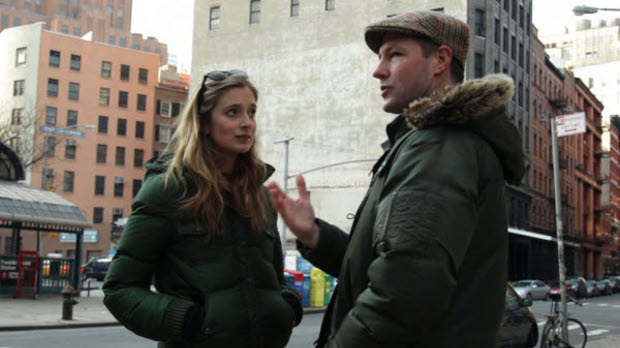
While procrastinating working yesterday, I was following Ed Burns’ Twitter stream, in which he detailed the no-budget nature of his latest film, Newlyweds. With a shooting budget of $9,000, Burns worked with a three-person crew, shot on the Canon 5D (which he owns), had the actors wear their own clothes and do their own hair and make up, and worked without lights (except an occasional china ball) and sound mixer (the actors wore lavs). Tweeted Burns, “Sound is important but don’t let it slow you down. The Italian Neo-realists didn’t and they made some pretty great films…. No disrespect to soundmen and women, but on these shooting schedules (12 days) you can’t be precious. When I have a budget, I have respect.”

He also revealed the budgets of all his films: “Budgets for past movies: The Groomsmen 3 Million, Purple Violets 4 Million, She’s the One 3 Million, Sidewalks of NY 1 Million, No Looking Back 5 Million, Brothers McMullen 25K. Looking For Kitty 250K, Nice Guy Johnny 25k, Newlyweds 9k.” Breaking down this latest picture, he writes, “Newlyweds shooting budget: 5k for actors, 2k insurance, 2k food and drink. 9k in the can. We only shot 12 days. That’s how to make an independent film.”

Interesting here are a few things. First, Burns is obviously making the choice to work this small. I’m sure he could successfully pound the pavement for a bigger budget. It’s just that he doesn’t want to do it anymore. He tweeted, “”I went hat in hand to the money guys for years. Just couldn’t do it anymore. Decided to write smaller stories and never looked back.” Second is the level of transparency. With first-time filmmakers being told by sales agents “not to talk budget,” here’s a veteran who has no qualms about pulling the curtain all the way back.

For more of Burns’ production tweets, follow him and/or visit Notes on Video, which has aggregated all the tweets in one place.

Speaking of Ed Burns, one of my favorite director dialogues appearing in Filmmaker is this one between Burns and Kevin Smith. Burns had won the Sundance Grand Jury Prize with The Brothers McMullen and was awaiting its release. Smith had scored with Clerks and just finished shooting his sophomore film, Mall Rats. Here’s an exchange where they both talk about facing down rejection and summoning up the will to become a filmmaker. Once more, it’s interesting to see Burns embrace now the same model he started his career with.

Burns:…. I knew I wanted to make films. I had written about seven screenplays, sending them out. Getting rejection letter after rejection letter. My dad was like, “You wanna be a filmmaker? Go out and make a fucking film. We don’t know people with a million dollars, so let’s figure out a way to make a low-budget one.”

Smith: And this was who?

Burns: My dad.

Smith: See, I had this little experience with my sister. She was like, “What do you want to be?” I want to be a filmmaker. She’s like “Be a filmmaker.” And I was like oh, yeah, right. And she was like “No. In your mind become a filmmaker. You’re a filmmaker from this day forward. Do everything as a filmmaker would do.” And it’s true. It works.

Burns: That’s exactly what he said, and the other good, important advice he gave me, which helped with rejection letter after rejection letter, was if you’re interested in the end result, you’re in it for the wrong reason. You enjoy the process. You’re doing this for you. You make the film you make. Who gives a crap what anyone else thinks? Does it hurt to be rejected? Hell yeah, it stings. I actually have all of my rejection letters –

Smith: Framed?

Burns: I took them all and stuck them on some thing and framed them. I actually have a rejection letter for McMullen from Fox.

Smith: Fox? Fox Searchlight?

Burns: No the big Fox and that one is on the frame.

You can follow any follow up comments to this entry through the RSS 2.0 feed.

  • Anonymous

    There’s another aspect of this story. Burns’s near-complete lack of talent.

  • filmbear

    Does not include batteries – crew labor, equipment, production design, set dressing, props, post-production, marketing or distribution… all “donated”?

    • Cur0001

      I wanna know why he would use a dp if he’s shooting digital. Just curious

      • Yourdirtymind

        Why wouldn’t you? The reasons for using one are still the same.

  • JoeG

    It’s not terribly hard to do a no-budget picture any longer. I’ve done two for under $3,000. Sure, no one has heard of them, but it can be done. http://www.facebook.com/deadofknight and http://www.facebook.com/larstheemokid

  • Pingback: Ed Burns Shots a $9,000 Feature with his 5D » Blog Archive » Timecode:nola

  • OldGrumpy

    Yeah, you can probably get a movie in the can for $9,000, probably for even less. But then what? You have no money for festival entry fees, P&A or distribution. You have a film that nobody will see and you’ll shoot yourself in the foot for not raising enough to get the film out there. Filmmakers shouldn’t be discouraged by this, by all means go out and make a micro budget feature. Just know you’ll be frustrated by having a film on your hands and no means to get it out to the world.

    • JoeG

      There are all kinds of means to get your no-budget film out into the world without traditional distribution, but that’s another article.

  • Gretchen

    Yeah, like filmbear, I’m wondering how the crew got paid–was it deferred? Also, who did the post-production? Did he edit it himself? Plus, of course, there are unexpected things that always come up.. I like the idea, I’m just curious about the details.. also, like OldGrumpy said, what about paying to get the movie out there? …or is that separate? I know people always talk about how much an indie movie was “shot” for and don’t talk about post or distribution

    • http://www.filmmakermagazine.com Scott Macaulay

      He’s pretty clear in the post that this was the shooting budget, not post. And no, I’m sure there are no distribution costs included in the film’s budget. Most indies don’t budget that way anyway.

  • Tom Quinn

    I love this. Thanks for posting it. It’s refreshing to see someone really stripping it down and being super practical.

  • Pingback: Breaking Down Ed Burns’ $9,000 Budget For Newlyweds « Movie City News

  • Mt

    filmbear: what props, what set dressing? As for crew, he probably shot it himself. No lights, and its his camera.

  • PaulB.

    I question: Is it as ‘in vogue’ to say ‘I made a Film for $9,000′ as it is to say ‘I got 2 suits for $50 at the Men’s Wharehouse?’ Go Ed Burns! He’s the man. But I think it helps that he’s Ed Burns. People will look for his film even if it was made for 5 bucks and belly lint. A programmer at the festivals will pick his over any of ours, just because he’s Ed Burns. I’m making a film for a little over $50K, and possibly a little more for post, because I really want a certain look. I’m trying to get someone with a Red One where the image won’t fall apart on a big screen. And with Transcoding and pulling focus, paying sound people, I’ll need a slightly larger team. And editing? and Music? 9k? I dunno how he’s doing it, but God bless him.

  • http://twitter.com/criticquicker Critic Quicker

    Let’s be honest, the budget has never been the question with Ed Burns. The question has been and remains to be, will Ed Burns ever make a movie worth watching?

    The most revealing thing about the Burns/Smith dialogue is that it’s a dialogue between two filmmakers who, over the course of two decades, have never made a single good film between them.

    Heaven help the filmmaker who seeks to be the next “Ed Burns” or “Kevin Smith”.

    • Brianmusicpaul

      Edward Burns has made some great films. No Looking Back? She’s the One?

  • http://twitter.com/KaufmanLivesOn Tiffany Joy Butler

    Beautiful. Thanks for posting Burns and Smith’s conversation. Fuck, FOX.

  • Yourdirtymind

    It seems to me that he’s basically advocating union-busting and being an “insider”, as none of those numbers are possible if you work through proper union channels and don’t get any favors from crew and/or actors.

  • Anonymous

    Well, yeah, anybody can make a movie for “less.” But there’s a difference between Spielberg doing it and say, ME doing it. My $9,000 movie likely isn’t going anywhere fast (unless I put in the work for festivals, agent screenings, other marketing, etc) while proven “Players” like Spielberg and Burns will instantly get screentime if not cable deals. Their lack of quality would be played up as avant garde while my lack of quality would be lambasted as cheap.

    I often get the question from aspiring filmmakers, “What camera should I buy?” or “What lights do I need to make a movie?” The answer, of course, is that you use what you need to tell the story correctly, nothing more and nothing less. Anything less means compromising the full potential of the project which then begs the question of “why bother?” Ed and Steven can bother because no matter what it looks or sounds like, it’ll get seen. The rest of us have to work a little harder than that so this once-every-couple-of-years speech about how filmmakers really don’t NEED to spend lots of money to get rich & famous isn’t realistic for most people.

    • Tom Quinn

      This is true, but the thing is that Burns made his first film for 25k and Spielberg made Amblin’ on the cheap. We can’t win, if we can’t play, etc.

  • Bedvs

    I would like to make a feature film – I have little to no money. Everyone is required to work for little or no money. But I have a good script. I will also shoot, edit, 1st AD, do continuity, and watch script amongst other things. And because of this I shall call it an Italian Neo-esc Avant Gard independant film.
    But if I had money, I would respect the professionals who do their respective jobs. But I choose not too for this project, maybe, the reason being that it might raise more awareness for my film.
    Whilst it is a shame that there are a lot of great scripts and story’s that don’t get a chance to be made, the reality is that it does cost money. How much money depends on low you want your standards to be. As long as it is a good script.
    I also hope that if this no budget independent film does make him some money, he sees it fit to pay everyone who donated their time or cut rates, to pay them accordingly and give back to his chosen profession.

  • Pingback: Make A [BLEEP]-ing Decision Already! « The Institution: a film by Justin W. Hedges

  • Pingback: Edward Burns’ Newlyweds Will Close Tribeca Film Festival | Movie Reviews and Movie News

  • DirectorDP

    The main problem these days is that everyone wants to make a 2 hour feature without even having a 2 minute short in their name. Digital has made shooting a “film” too easy. Press the record button, shoot at 6400 ISO, no lights, a Rode mike on camera, your brother in law carrying cases, and you are a “filmmaker”. I’ve been shooting 35mm for over 40 years, 6 independent low budget features to my name,  I have adapted very easily to shoot digital, mostly with a Canon D5, but I still use a good, although smaller, crew, a grip truck, generator, camera and lighting package, and a good sound person. Crappy scripts, crappy acting, photography and even crappier sound are tell tale signs of no budget productions from inexperienced wannabes. I agree that you have to start somewhere, but please, take time to learn the craft of filmmaking. That’s something you don’t learn shooting on weekends and uploading to You Tube, or using the latest digital camera with 3 more megapixels. There are a few talented people out there that maybe can make a “reasonable” film with $9k, but those are few and far in between. Recently, I did a favor to a friend shooting a small film for less than $15k, (I did it gratis) and it was the most frustrating experience in my entire professional life. Even the simplest set ups became impossible to do right because of the lack of the proper tools. A 12 x 12 butterfly or a couple of Kinos would have done wonders in some cases but…you want what?  My last 35mm feature had a low budget of $3.2 million and I was sweating through the entire shoot, you can imagine $15k.  I’d hope that you guys stop the fantasy of “El Mariachi” having been shot for $7k. I admire Robert Rodriguez, but the reality is that he got film and processing for free, the camera was borrowed, the actors and the crew worked for credit and future pay if the movie made any money, so, I figure the real cost of the film in real terms was about $150 to $200k.

    • YoungFilmmaker

      @f62307f5439870625baeea1c15fd3d5c:disqus -You’re an old has been and it’s folks like you that make the industry  to elitist and far more difficult than it has to be to create works of excellence. Thats the beauty of film – it’s subjective. What you may think is “crap” from a “wanabe” others see and a hit and it goes on to make millions. Stop being such a discouraging, grumpy old coot and realize you’re not the “chosen one” when it comes to filmmaking. 

  • http://twitter.com/dandunphy daniel dunphy

    On day most people will star in their own feature film.  Thanks to cameras like the 5D.
    Now lower your price of the Canon 300mm 2.8 lens, and you have me back as a huge supporter.

  • Pingback: First Look Friday December 30th 2011

  • subtextiseverything

    I think everyone is missing the point of this type of discussion. The question is not how do we make a feature for no money so we can be a filmmaker. If your goal is simply to make a feature, you might as well take whatever money you have and throw it away. I co-produced a feature that we did for 20K. Sure it looked great, but our focus was that even we could make a movie, and we could do it for cheap. The script, performances, cinematography, and editing all got pushed to a back burner. Not because we didn’t have the budget to give them more attention, but because we were so in awe of ourselves for doing something on such a small budget that we forgot what we were trying to do. Yes, we got the film made and it even has a small distribution deal and we will probably make our money back, but it was not what it could have been on that budget.

    We are now making another feature on a smaller budget. The question is no longer, can we make a low budget film. The question is can we make a great film regardless of the budget. That takes a strong understanding of film, attention to detail, a great script, fantastic actors, and a dedicated and passionate crew. Money is secondary to all of those. It’s been proven a feature can be made for cheap. The missing ingredient, is you have to know what you are doing. Most people are making no-budget films to say that they have made a film. Who cares? Make films that matter, regardless of how low the production cost is.

  • Pingback: Gozzip.se - Allt om Kändisar, Blogg och Mode Chris Krapek: Newlyweds Lets $9,000 Go a Long Way |

VOD CALENDAR

Filmmaker's curated calendar of the latest video on demand titles.
Contagion The Guard Hell And Back Again
See the VOD Calendar →
Filmmaker's Best Of 2011

Entries (RSS) and Comments (RSS)

The Filmmaker Magazine Blog is powered by WordPress.org.