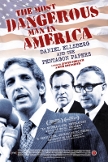
The Most Dangerous Man In America

JUDITH EHRLICH AND RICK GOLDSMITH, THE MOST DANGEROUS MAN IN AMERICA |
By Damon Smith

Thursday, February 25th, 2010

Leading up to the Oscars on March 7, we will be highlighting the nominated films that have appeared in the magazine or on the Website in the last year. Damon Smith interviewed The Most Dangerous Man In America directors Judith Ehrlich and Rick Goldsmith for our Director Interviews section of the Website. The Most Dangerous Man In America is nominated for Best Documentary.

As a history lesson, Judith Ehrlich and Rick Goldsmith’s enthralling new documentary, The Most Dangerous Man in America: Daniel Ellsberg and the Pentagon Papers, is as solid as a textbook, stitching together old broadcast footage, first-person testimony, tart excerpts from the Nixon White House tapes, and noirish recreations into riveting, revelatory political drama. The name “Daniel Ellsberg” probably doesn’t trigger the same flurry of associations as Deep Throat, the shadowy antihero of the Watergate scandal, but it should: An ex-Marine, former assistant to Secretary of Defense Robert S. McNamara, and highly respected analyst at the Rand Corporation, Ellsberg leaked a 7,000-page study detailing the top-secret Southeast Asia policies of five presidential administrations to the New York Times, resulting in a landmark court case, attempted cover-ups, and a nasty smear campaign, all culminating in the ignominious resignation of President Nixon. To be sure, the spy-grade story of the Pentagon Papers controversy has a lot of rich angles, including government secrecy, first-amendment rights versus executive privilege, and the rise of the national security state. But it’s also a conversion tale deeply concerned with the burden of conscience that Ellsberg felt as a government insider to tell the public what he believed they had a right to know, and his desire as a newly minted dove to change the course of the Vietnam War.

Part journalistic exposé, part overdue homage to one of the last century’s most notorious whistleblowers, Most Dangerous Man is a pressurized piece of filmmaking, resonating with issues (civil rights, the press, the conduct of war) still worrying the national conscience. With considerable flair backed by exhaustive research, Ehrlich (The Good War and Those Who Refused to Fight It, 2001) and Goldsmith (… Read the rest

PALM SPRINGS INTERNATIONAL FILM FESTIVAL | By Graham Flashner

Friday, January 15th, 2010

Now in its 21st year, the Palm Springs International Film Festival Festival (Jan. 5-18) continues to be the place to be seen for foreign film Oscar contenders, 41 of which screened in this year’s Festival. U.S. films, for the most part, take a distant back seat, since most serious American filmmakers don’t want to risk of alienating the Sundance Film Festival, which comes on the heels of Palm Springs and insists on its films being U.S. premieres. While there were a smattering of U.S. indies, the majority would never be confused with Sundance entrees, except for the very fine The Most Dangerous Man in America, the Daniel Ellsberg doc (and likely Oscars favorite) that was my favorite film in the four days I was here. But more on that in a bit.

Compared to the hipster flash of Sundance or the frenetic marketplace that is Cannes, PS flies under the radar, close enough to L.A. to preserve an aura of Hollywood glamour, far enough to remain unspoiled by the elitism that can pervade in New York or Venice. With its azure desert skies and well-heeled senior demographic, PS is normally a placid experience. This year, however, controversy intruded on the proceedings, as the festival found itself in the middle of a diplomatic imbroglio.

Early last week, the festival’s executive director, Darryl MacDonald, received a call from the Chinese consul in Los Angeles, asking that the festival not show the documentary The Sun Behind The Clouds, about Tibet and the Dalai Lama.

“I explained that it was a foreign co-production, not just Tibetan,” MacDonald recalls. “They said, ‘you can’t play this film because it’s not accurate. It purports that Tibet is being suppressed by China – even your own government agrees that Tibet is part of China.”

MacDonald was not about to let a foreign country dictate what he could and could not show at his own festival. “I said, this is a question of freedom of expression,” he says. “It’s an artistic event, not a political event.”

MacDonald refused to pull the film. Days later, the Chinese filmmakers … Read the rest

VOD CALENDAR

Filmmaker's curated calendar of the latest video on demand titles.
Contagion The Guard Hell And Back Again
See the VOD Calendar →
Filmmaker's Best Of 2011

Entries (RSS) and Comments (RSS)

The Filmmaker Magazine Blog is powered by WordPress.org.