VIEWING ZEITGEISTS AND THE BEST U.S. INDIES OF THE DECADE | By Jason Sanders
To try to recall your favorite films from an entire decade (and then to limit them to only ten titles) is to immediately set yourself up for uncertainty and ridicule: first off because it's hard enough to remember what you saw ten days ago, much less ten years ago, and secondly because to limit the list to ten is to leave hundreds of excellent films out, titles that you'll undoubtedly get bludgeoned to death with through later feedback (“You blithering idiot~pretentious snob~Hollywood tool! How could you leave out Judd Apatow~Jean-Luc Godard~Abbas Kiarostami~McG,” read the heated responses to already posted lists). To create a list of a “the best” of a year (or a decade) is to confront what makes a person “love” a film in general: sometimes your response depends not just on personal taste, but timing, audience, and mood; you may have seen The Dark Knight or There Will Be Blood with a pounding headache and a group of incessant popcorn munchers to your left; you could have watched Beau Travail and Nobody Knows in a tiny overheated multiplex with a seven-foot-tall Dutchman blocking the subtitles in front of you, or you could have just been getting over some personal tragedy when, suddenly, you saw a film that made it all—life, love, friendship, whatever—make perfect sense.
Because of these random accidents of viewing, any list is bound to be personal; some of the following films were chosen because they affected the decade’s zeitgeist, others chosen because they just affected mine. Some are probably not in a top-ten for box-office, or even artistic merit; instead, they are ones that affected me the most with their intelligence/craft/humour/etc, or the ones that, due to whatever reasons of mood and life, moved me beyond belief.
Most interesting trend of the 2000’s: the return of regional styles of filmmaking to independent American cinema. Starting in 2000 with George Washington, with its decaying Southern setting and just-as-precise Southern aesthetic and mood, American film moved away from its “Anywhere, USA” style and instead rooted itself in a particular, evocative setting. Films like George Washington and All the Real Girls, Shotgun Stories, Ballast, Cinnamon, Old Joy and Wendy & Lucy defined regions of the United States usually ignored by commercial cinema, while titles like Man Push Cart and Chop Shop, Prince of Broadway and Take Out, Medicine for Melancholy, and Inbetween Days explored parts of “the big city” previously discarded.
Also, some questions about the other trends of the 2000’s:
1. Has blogging made it easier for individuals to get their voices and opinions heard about film, or has it made it paradoxically even more difficult, due to the sheer volume and periodic toxicity of such sites? Does the cream rise to the top, or only the screamers?
2. Seth Rogen and Will Ferrell are the screen emblems of the Bush years. Discuss.
3. Will the mumblecore movement last into the next decade, and how will it be remembered? Or should it be?
4. At the dawn of 1999 independent filmmakers had only one choice: to get their films into a festival (preferably Sundance), then hope it was either selected by other festivals or even picked up for “limited release,” (preferably by a larger indie distributor), and pray that it could later make a DVD release. At the end of 2009, is this the preferred route of discovery, or has online availability or self-distributed DVD deals become the alternative? And at the end of 2019, will any of these options be available?
5. Speaking of Sundance, what was in 1999 the best spotlight of American independent film has now become, arguably, the best place to see Paris Hilton in line buying perfume for the ski run. Its definition of “independent film” became “anything under $100 million, with more talking than action” and it became arguably overrun with whatever warmed-over family melodrama or this-is-our-quirky-town comedy that it could churn out.
Top Independents:
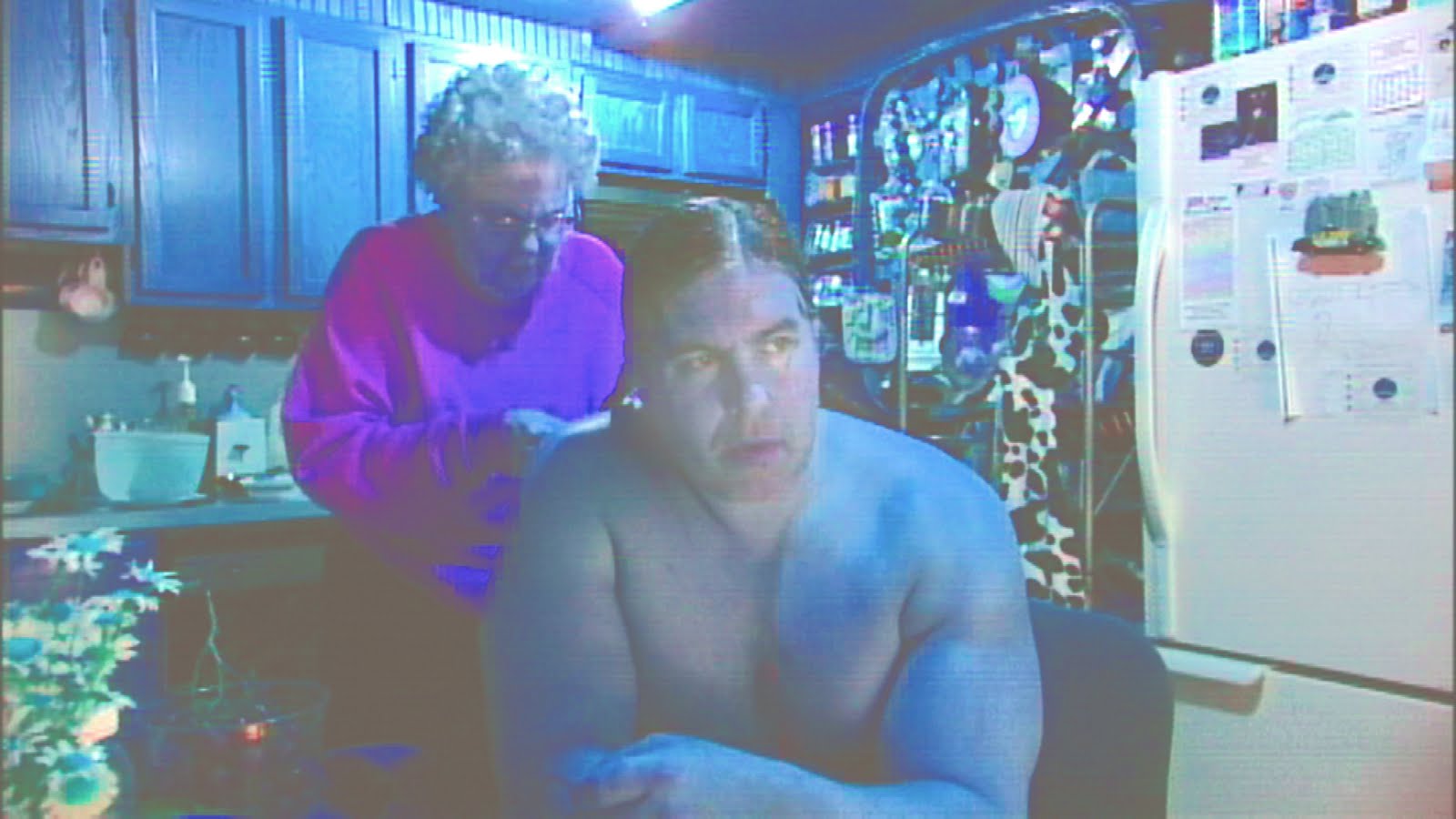
1. George Washington (pictured above), dir. David Gordon Greene, 2000. Coming out of nowhere in 2000, David Gordon Greene's debut re-introduced a specific regional aesthetic into what had become an “Anywhere, USA” approach to American indies. It also reminded American filmmakers that it was alright to fill the screen not with shot-reverse-shots of people talking constantly, or even with people, but with images of the environment and the surroundings that made up their lives (Tim Orr’s cinematography made the film the best-looking of this decade as well.) A film of the decaying American south, created with the pacing and eye of a Japanese master.
2. Funny Ha Ha, dir. Andrew Bujalski, 2002. With a battered 16mm camera and some friends, Andrew Bujalski's deceptively casual debut followed Marnie, a young woman with nothing much to do, and all the time in the world to not do it in. With its observational shoulder-cam realism and uncanny feel for the flow (or lack thereof) of contemporary youth, it touchingly unveiled the endless chatter and awkward intimacies of a new generation of the over-educated and under-employed, and bore far more resemblence to Linklater’s 90’s favorite Slacker than what it later became known for spawning, a “mumblecore” movement that shared its constant dialogue and monotonously white casting net, but often lacked its wit, pacing, and heart.
3. 10 Skies/13 Lakes, dir. James Benning, 2004. These two experimental features by legendary filmmaker James Benning (father of riot grrrl/Pixelvision icon Sadie) were as self-explanatory as their titles: images of 10 skies, or 13 lakes, but within them lay a beauty and a peace (and a true sense of life) rarely seen onscreen. To say that “anyone could film this stuff” is to miss the point; anyone could try, but very few do, and none have succeeded as Benning has in creating a work that echoes the nature, life, and awe of the American landscape.
4. Man Push Cart (2005) & Chop Shop (2007), dir. Rahmin Bahrani. Many films took place in New York City during the past decade, but few captured its energy, pace, and the struggle of its citizens to survive than these two vibrant films by Ramin Bahrani. These works, along with Sean Baker’s Prince of Broadway, will define NYC in 2000’s the same way that Taxi Driver defines our image of NYC in the ‘70s.
And then, in alphabetical order… . Better Luck Tomorrow, dir. Justin Lin, 2002. It’s easy to forget how game-changing this Asian American indie was when it debuted in 2002; its blend of valedictorians-gone-awry, suburban tract-home rebellion, and high school Tarantino’isms, added to a fierce declaration of Asian American identity, made even MTV sit up and pay attention (the company distributed the film), and served notice that Asian American filmmaking (and filmmakers, and film stars) were not only here, but ready to f**k you up.
Cinnamon, dir. Kevin Jerome Everson, 2006. Georgia-based filmmaker Everson has been making experimental shorts, documentaries and features for over a decade; his films illuminate, as he puts it, “the relentlessness of everyday life,” the gestures, rhythms, and places of black working-class America, and the pride and grace found within. A mechanic lovingly working on a car; a bank teller going through her day; correctional officers pacing a prison walls: he contemplatively turns his camera towards the worlds that most artists ignore, but that the rest of us live in every day. Cinnamon, a portrait of drag-racing in a Southern African American community, is his feature.
Fahrenheit 9/11 (Michael Moore) & Super-Size Me (Morgan Spurlock). Michael Moore introduced and perfected the one-man-with-a-camera- wrecking crew ideal in his Roger and Me, and gave it its most powerful form in the embitted Fahrenheit 9/11. Morgan Spurlock's disarming one-man-campaign to eat his body into dis-repair, Super-Size Me, was a worthy successor to Moore’s cinema, and for better or worse paved the way for the parade of foodie-conscious documentaries of today.
The Foot Fist Way, dir.Jody Hill, 2006. This droll rural-Americana merging of martial arts and middle-aged breakdown features a small-town Tae Kwon Do instructor (Danny McBride, in one of his first starring roles) on his way to losing his mind and his bimbo of a wife, but who’s (almost) kept sane by his undying, utterly incorrect belief in his own talent. With the relentlessly mustachiod McBride unleashing a terrifyingly spot-on impersonation of Suburban Homo Sapiens (complete with khaki-shorts-and-white-loafers suburban-man outfit), The Foot Fist Way is not only funnier than any independent film made this decade, but funnier than any Hollywood film. Evidently worried about the competition, Will Ferrell and his production shingle Gary Sanchez Productions picked up the film for release, and added McBride and director Jody Hill to their stable of talent.
Grizzly Man, dir. Werner Herzog, 2005. A nature film that says more about humanity than nature. Herzog takes the footage left behind by naturalist/lost man Timothy Treadwell, who lived with the bears of Alaska, and turns it into an investigation of not only the natural world, but humanity’s, vision of it. Marrying the visuals of the most intimate Wildlife Channel special one could ever see (the film, in fact, was funded by Discovery Channel) to a psychological portrait of a possibly “lost” man, Grizzly Man becomes a debate between two filmmakers, Treadwell and Herzog, with the latter asking questions of the former, and finding answers only in the images left behind. “Here I differ with Treadwell,” Herzog intones at one point. “I believe the common denominator of nature is not harmony, but chaos, hostility, and murder.”
In Between Days, dir. So Young Kim, 2007. This icy Canadian psychological study follows a young immigrant teen set adrift in the dead of a Toronto winter; marrying a Dardennes Brothers sense of relentless realism to an eerie grasp of nature and environment (the crunch of ice and snow under the heroine’s boots is more omnipresent than any human voice), this debut announced a formidable talent in director So Yong Kim (who later made Treeless Mountain) and producer Bradley Rust Gray (responsible for the wondrous The Exploding Girl).
Me, You, and Everyone We Know, dir. Miranda July, 2005. The best of the "quirky little people in our quirky little town" subgenre of independent filmmaking (see: Napoleon Dynamite; Little Miss Sunshine, etc), due to its memorable aura of sadness, strangeness, and hope. Less interested in the usual indie-film expose of suburban life, July instead focuses on the magical strangeness of everyday living, of children who want to become adults, of the old hoping to reclaim their youth, and of all of us, and everyone we know, hoping to be loved.
Sleep Dealer, dir. Alex Rivera, 2008. This little-seen sci-fi epic about a future where companies controlled the global water supply and Mexican immigrants did American’s crap work not in person, but through cyber-power beamed over the border (“we get the labor, not the bodies,”) did the impossible: through new technologies and visual effects, it created a glossy, highly believable sci-fi future with about 1/100th of the budget of a Hollywood film, and, like the best science fiction, addressed the contemporary fissures of American society.
The Subconscious Art of Graffitti Removal, dir. Matt McCormick, 2001. The most inventive, comical idea I've seen in film this decade, Matt McCormick's arid 15-minute docu-fiction dryly proposes that the efforts to paint over graffiti on urban streets are, in fact, a form of subconscious art. Not just a tongue-in-cheek novelty, this short (narrated by Miranda July) calls into question all ideas of art, art appreciation, and the strange beauty that can be found even on highway underpasses or the sides of city busses.
Old Joy (2006) & Wendy & Lucy (2008), dir. Kelly Reichardt. Reichardt dragged the American indie out of its comfy shell and straight into the woods of the Pacific Northwest, where it uncovered trash-strewn mountain-sides and most of all an ignored, little-seen, but ever-growing American underclass, individuals who were either shut out of the economy, or who just preferred to ignore it completely.
Tarnation, dir. Jonathan Caouette, 2003. Seemingly forgotten now, Caouette’s stunning documentary, famously created on a home computer, opened the way for first-person, highly personal documentaries, though few matched Tarnation’s intensity and fever pitch. “Tarnation is designed to mimic my thought processes so the audience can feel like they're in a living dream,” wrote Caouette, “which can be scary and intense, but also beautiful and glorious." Such adjectives certainly apply to Tarnation, but sadly to few other American documentaries.
Top American independents, studio creations:
1. Before Sunset, dir. Richard Linklater, 2004. This Julie Delpy/Ethan Hawke sequel to Before Sunrise was utterly unlike any Hollywood romance before it, and is unlike any Hollywood romance made afterwards. No gay best friends, no moments of high comedy with blundering relatives; instead, just a measured, melancholy take on love, loss, and coming to terms not only with what your life didn’t become, but what it probably never will be.
2. Mulholland Drive, dir. David Lynch, 2001. You may have heard of this film. There’s been enough written on it, but suffice to say that decades from now, people will be thinking, “Wow, 2001 was a great year for American film, if it made, released, and made successful a film like Mulholland Drive.”
3. Being John Malkovich, dir. Spike Jonze. Eternal Sunshine of the Spotless Mind may have done American Strange better and bigger, but Being John Malkovich paved the way; before its success, no one could have believed the country was ready for Charlie Kaufman’s bizarre scripts and Spike Jonze’s skateboard surrealism. (Editor's Note: Being John Malkovich placed on our poll but was removed because it was released at the end of 1999.)
4. When the Levee Broke: A Requiem in Four Acts, dir. Spike Lee, 2006. Made for HBO but given a limited release in festivals, Lee’s powerful documentary on Hurricane Katrina is still the greatest work on one of the greatest of 21st century American tragedies. Personal and political, filled with both rage and quiet intelligence, it’s a testament to a city, and to filmmaking.
# posted by Scott Macaulay @ 12/31/2009 12:13:00 PM
Comments (1)
Wednesday, December 30, 2009
IT WAS THE AUGHTS, AND I WENT TO THE MOVIES | By Brandon Harris
It was the aughts, and I went to (and made a few) movies. I did it mostly for pleasure, sometimes for distraction, often to see what others thought of the wild world around us; by the end, I did it simply because it was the only way I saw fit to make a living (sort of). It was a bell curve of sorts, a graph of this burgeoning obsession, this ecstatic object of study, of debate, of joy. By the middle of the decade, I was watching somewhere between three hundred and fifty and four hundred movies, old and new, each year, often alone on big energy eating screens, my carbon footprint be damned. I see a little more than half that number these days and surely saw about half that number back in 2000. When I reflect on it now, on this decade “from hell” as Time Magazine recently put it, I wonder what forces of early century American life drove this profound and insatiable passion of mine into something that could be described as a rote professional obligation. It couldn’t have just been debt (student, credit card) and the widespread mediocrity that I was one of the few privileged surveyors of. Hey, at least I still had something I could refer to as a job.
On a March night in 2001, when I turned my TV off in frustration as Michael Douglas announced that Gladiator had beaten Traffic for the best picture, I knew being disillusioned might be on its way to becoming my default psychological state. It had only been four months since I had gone to bed one night with Al Gore comfortably ahead of votes in Florida and awoken to find that George W. Bush had been elected President and only three months since the Supreme Court decided that we should stop counting votes. I was already getting prepared for a brave new post millennial world; I had decided I was an atheist (a stance I no longer sustain) with a blond Afro in the middle of my Catholic school years. I had stopped playing football and started reading DeLillo and Pynchon, making the points Michael Lewis’ Moneyball did years before it came out as I watched economic inequity take over nearly every aspect of American life, even my beloved hometown Reds. I attended the movies as some did mass, nearly everyday, writing about them with equal fervor, noticing beauty and truth in the best of the products themselves, subterfuge and deceit in the making, marketing and categorizing of them (this held true for almost everything else Americans produced to). I don’t think I saw a better movie in the year 2000 than Traffic (no matter that it was shot on some of the very streets I used to hang out and do drugs on in Cincinnati), although Edward Yang’s Yi-Yi, Christopher Nolan’s Memento, Tom Tykwer’s The Princess and The Warrior, David Gordon Green’s George Washington, James Gray’s The Yards and Darren Aronofsky’s Requiem for a Dream were damn close. Of course, I didn’t see Wong Kar-Wai’s In The Mood for Love for another year. Regardless, even though Traffic apparently had the best editor, screenwriter, supporting actor and director of the year, in the eyes of a gross receipts obsessed magic machine know as the mainstream American film industry, Gladiator was the best company town product. I knew we’d still be fighting a hopeless, financially devastating, morally hazardous drug war by the time I was a real film critic. I also knew my tastes and opinions, already diverging from my more Conservative and force fed peers, might get me somewhere if I just figured out how to record them with honest empiricism and eloquent thirst for truth.
Of course, since by decade’s end six hundred or so films were coming out onto commercial screens large and small, most unnoticed and uncared for, even though I was getting paid (occasionally) to write about films, I was clearly no expert on what was happening out there and neither were you. Why were so many people making so many independent movies when the public at large wasn’t going to see or hear of the broad majority of them? Was it just the democratization of the tools? Was it the heady times of easy credit and oligarchs waiting to believe in a dream? Surely not. Most of these films were not being shot by groups of teenagers, or octogenarians or Haitians or Ohioans or some other unlikely, newly empowered cohort with PD-150s (first half of the decade) or HVXs (second half). The oligarchs were still, by and large, not making their money back. I’m still asking the same questions I was a decade ago, when I was but a sixteen year old aspiring filmsomething; how do I get $200,000 to make a movie? Once I do that, how do I get anybody to watch it? I’m sure many of you are asking these same questions. Many of you already have it figured out. And despite all the tragedy and hardships that this decade held, we all kept going. We kept believing in dreams.
But whose dreams? What movies were not being made? What were (and are) the structuring absences of American cinema in the aughts? What did all of this say about what was happening to our Country? Why is a film like John Lee Hancock’s The Blind Side embraced and Ryan Fleck and Anna Boden’s Sugar undervalued, Lee Daniel’s (woulda, shoulda been Geoff Fletcher’s) Precious championed and Tiny Mabry’s Mississippi Damned ignored by the mechanics of the movie distribution system and the gatekeepers of the media apparatus, only for audiences to submit to the easy charms of mass marketed films while objects that more accurately and delicately reflect their experiences get pushed aside? Quirky, upper middle class (Caucasian) family dramedys were everywhere, spurred on by the great, long tail success of Wes Anderson’s The Royal Tenenbaums, but somehow the devastating portraits of the real cultural, economic and ideological divides tearing our families’ (and our Countries’) fabric apart, like Laura Poitras’ Flag Wars oR Phil Morrison and Angus Maclachlan’s Junebug were getting lost in the shuffle. That Junebug and Sugar were both distributed by Sony Pictures Classics yet couldn’t find any significant foothold in the marketplace suggests that even when the real indie pros get a great, canon worthy Amerindie, they don’t know what to do with it, how it get it out into the cultural conversation ahead of Tiger Woods whores or the last days of Jacko.
Although we might not agree on which ones, we all know that there were some truly wonderful movies. Too many were made for their not to be! But whoever heard of The Smith Brothers’ The Slaughter Rule? How many people saw Lynne Ramsay’s Morvern Callar or Ronald Bronstein’s Frownland theatrically? Long live Robinson Devor’s Police Beat… in obscurity. Could these films ever speak to mass audiences? If there such special works, why can’t they? If they truly can’t, then what does that say about mass audiences and by extension, our entire citizenries’ capability of decoding a century old visual language? Our schools teach people to read (just barely), but not to watch, an activity that is the first thing we consciously begin to do, one that shapes much of our biases, our reasoning capacity, the rhythm of our lives, an activity that the most fortunate of us never stop doing until we die. You’d think primary and secondary, but especially high schools might pay more attention to it when many American children watch as much as six hours of TV a day. I know I used to. Look how I turned out.
Cinema is alive and well in 2010, but it’s the world that’s not and cinema’s health cannot be considered independent from it. No wonder prominent movie producers now frequently tweet about their desire to do the impossible; produce a narrative film, an incredibly energy and waste intensive process, in a “green” manner, an environmentally friendly way. Yet the mere implication that such a thing can be done is to, as so many of our best, most essential movies this decade did, embrace the high stakes of the age we live in, that refused the intellectual and emotional complacency that Hollywood, Indiewood and Mumblecore largely offered us. Of course they were mainly documentaries (Carl Deal and Tia Lessin’s Trouble the Water, Charles Ferguson’s No End in Sight, Chris Smith’s Collapse). Yet for every regrettably conceived and manufactured cycle that surfaced and thrived during the decade (the Bromances of Judd Apatow or the torture porn vehicles of Lionsgate for instance) there was an anomaly that presented a breakthrough of honest aesthetics and critical thought (Kelly Reichardt’s Old Joy, Errol Morris’ Standing Operating Procedure). So, at least for now, I’m keeping hope alive and my exhaustion in check, readying myself for a brave new world once again.
50 essential movies of the aughts according to yours truly — some widely known, some not — off the top of my head:
# posted by Scott Macaulay @ 12/30/2009 04:27:00 PM
Comments (3)
Tuesday, November 17, 2009
THE LONELINESS OF THE LONG DISTANCE FILMMAKER By Noah Buschel
I'm at the Edinburgh Film Festival, jetlagged bad, and I'm asked for emerging filmmaker advice by some kid. He says, in particular, he wants to know about making art films and being a writer/director. Oh boy. I try to find something to say, but it's disingenuous and the kid knows it. I go back to the hotel room and roll around in the bed, can't sleep. The only thing on the T.V. is Michael Jackson's body bag.
I go to the window and look at the ancient castle and the ancient fog and I think about what I would tell the kid if I really had the nerve — if my nerves weren't all shot. This is what I'd tell him: If you really wanna make movies, and make them your own — there's gonna be loneliness. And no one really talks about it, but it's true, I promise. For instance, did you know that even the people you work with — a lot of them won't like the final product. They'll think you screwed it up and not really dig what you're doing. And your producers will hate you. And your editor will quit you. And your dog will give you dirty looks in the morning.
There isn't too much time to feel sorry for yourself. The distributors just sent you the poster and it's fine, it's fine, it's fine — you know it's fine — but Goddamnit it ain't the movie you made and you gotta at least try to make it the movie you made. At least try. But it's fine. But it's not. You take a long walk at three in the morning. Kick bottle caps.
The project is your project, and it is your problem. It's not anyone else's problem. In the years that you spend on the project, it's very likely you will never have a conversation with anyone about the project that makes you feel less alone with the project. The project is a problem.
But you know! You know it's true. You know what you're saying and that the movie is true. You're there again, in the editing room, long after the sane and mature people have gone home. You watch the scene go down again. And even some of those actors who don't like the movie — you love their performances in this movie they don't like. And even the editor who has left the building — her cuts are just so choice. And the costumes, and the camera moves, and the production design… You know. You know it's true.
But did you see what Orson Welles looked like towards the end of his life? Do you know what happened to John Cassavetes? And those are the Superheroes. What about us mere mortals? What kind of toll does this thing take? This indie filmmaking thing.
Late night movie mumblings and complaints, but now your lover is like — enuff already. Enough, yes, exactly. It's been years now. You know, for your health's sake, enough is enough and you gotta get away from the project. And you do. You start to write new stuff again. You play some volleyball. You even get to bed on time. But then there's that email. That email with the link to the trailer. That's the trailer? That's the trailer for your movie? I don't think so. This isn't gonna stand. Oh, but it will. Shoot. You're out on the street again, playing soccer with the bottle caps. Strangers cross to the other side. You've become a menace, man.
You read a New York Times article about Kenneth Lonergan and feel less crazy. You start talking with the couple producers who will still talk to you about future projects. You get scared at the possibility that these future projects might actually happen.
You go to a festival and some kid asks you for advice. You say something about "only doing it if you have no choice." The kid kind of rolls his eyes. You probably sound like one of his gym teachers.
Outside the movie theater, you get in a van. The van drives you back to the hotel. The driver of the van is talking excitedly about all the popular movies at the festival this year. You know these films well by now — they were the popular films at all the other festivals too. You're looking out the window at the cloudy streets, and you wonder what it would be like to make one of those really popular films. Something crowd-friendly, agent-friendly. And you start thinking of different scenarios and formulas.
You get out of the van, go into the crowded lobby. Everyone is listening to "Thriller" and having a good time. The lady at the front desk stops you, asks you if you are staying there. You tell her you are, produce a room key. She smiles apologetically.
In the elevator up there's a real old lady. She tells you that she saw your film today. She tells you how much she appreciated the quietness of it. You nod your head, lower your eyes, try not to let her know she just saved your life.
Read our interview with Noah Buschel at the 2009 Sundance Film Festival about this latest film, The Missing Person. Strand Releasing opens the film this weekend.
# posted by Scott Macaulay @ 11/17/2009 10:13:00 PM
Comments (11)
Friday, November 13, 2009
INDIE FILM INK PIRATED, FILMMAKERS PLEASED By Mike Johnston
When I attended the Future of Music Conference this year I heard a lot of talk about all of the opportunities that exist today for indie musicians to create and distribute their products via digital media on the web. Later, at the Flyway Film Festival I heard former Tribeca CEO Brian Newman speak on similar topics in relation to indie filmmakers. The central theme to all of it is that indie artists can be successful without a major label contract or major studio distribution.
In the end though talk is cheap and what looks good on paper doesn’t always translate easily into the real world. I wanted to test the waters firsthand so I created a video podcast featuring live performances by indie musicians. The show runs roughly a half hour and I have been shooting a new episode every week for the past three weeks. In that time I have arranged distribution of the show via all the major video sites on the web. It is also available on TV via iTunes and Roku as well as on mobile devices and game systems.
So far the show has answered all my questions. It is indeed possible to create content of reasonable quality and achieve worldwide distribution using commonly available digital means. In addition it is possible, using these same resources, to cross the divide between computers and other systems such as cell phones, PDA’s, game systems and even TV via Roku and TiVo or AppleTV/X-Box/PS3. It is also possible to do it on a shoestring budget. The experiment, called The Indie Music Show has, to date, cost me around 2.5k.
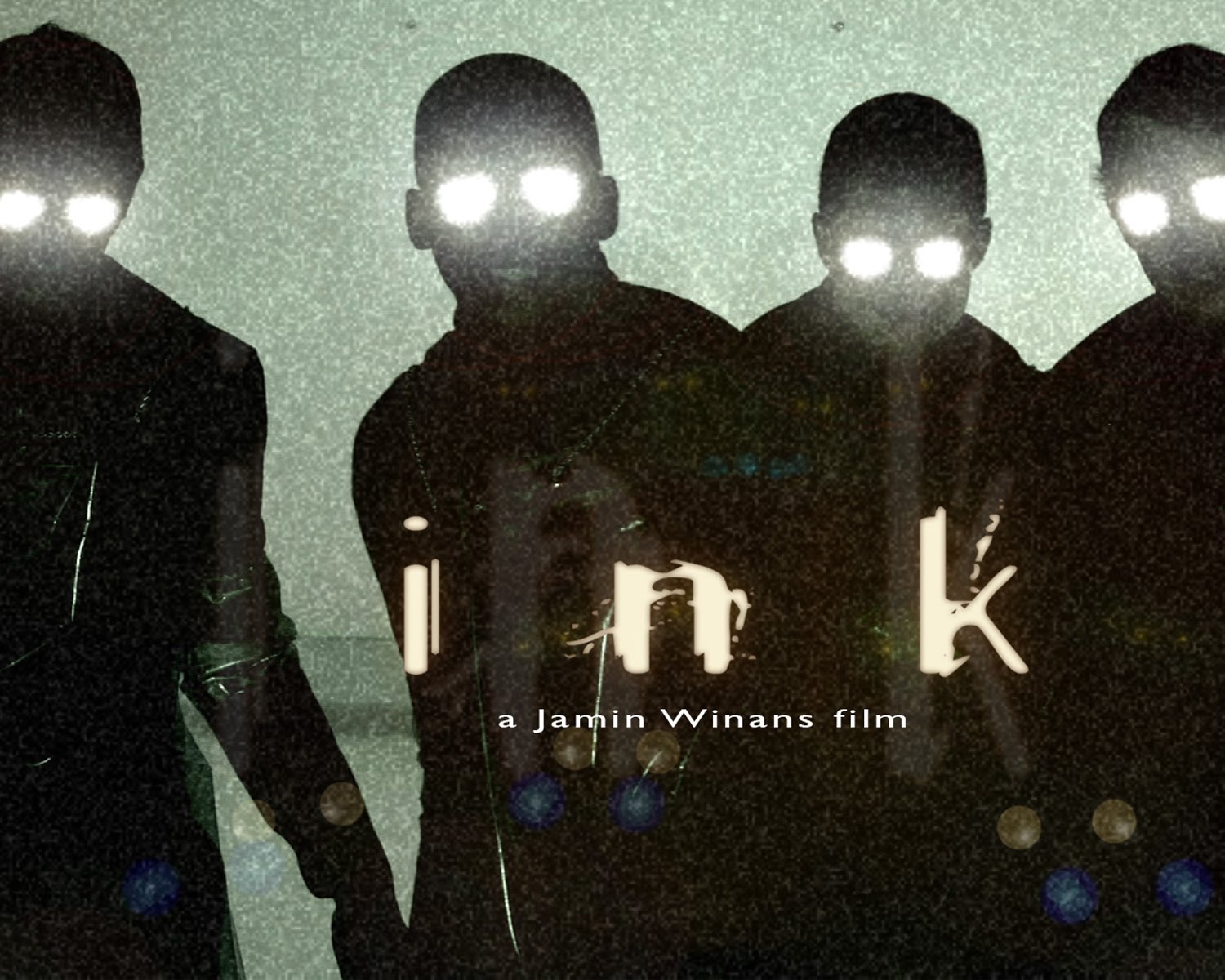
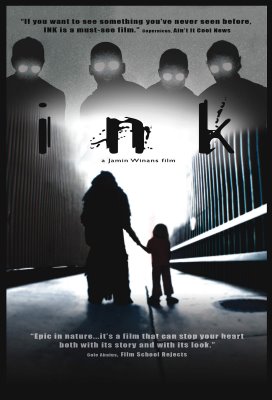
This week, when I saw Jamin and Kiowa Winans of Double Edge Films sending out excited messages on Twitter to the effect that their movie Ink had been ripped and uploaded to Pirate Bay I was intrigued. I guess I was just sort of programmed by negative publicity to see sites like Pirate Bay as a bad thing. On the other hand, once I thought about it, I could certainly see the exposure potential of putting a project in front of the 140 million users of bittorrent sites worldwide. So I put my show up on Pirate Bay to see what would happen. In two days views of the show on its home page tripled.
It is more tricky for a movie though, since a movie is much more of a one shot deal than a weekly TV show. Most people will see a film once, maybe twice if they really like it and maybe buy the DVD if they really, really like it whereas a TV show needs to attract and hold repeat viewers. From that perspective the major studios and probably most indie filmmakers see a pirated film as lost revenue and so bittorrent remains pretty much unexplored territory in relation to positive outcomes.
Kiowa and Jamin on the other hand seem to be approaching the issue from a different perspective. I wanted to get their views on what is happening with their film and spoke to Jamin about it.
Filmmaker: Why are you guys having such a positive reaction to your film being pirated?
Winans: The last eight months have been a brutal struggle for Ink. We premiered the film at Santa Barbara Int'l Film Festival, signed with the agency UTA, and opened in Denver for a very successful eight-week run. However, indie film distribution in general has imploded. All the indie branches of the big studios have shut down and no one is buying films. So we took Ink out one theater at a time for the last several months ourselves trying to gain some momentum. The little money we made on each screen we used to push to the next screen. Theater after theater we had amazing crowds, reactions, and new fans, yet every decent distributor wouldn't touch the film. We knew we had an audience, but no way to get the film out wider to them. We were getting hundreds of emails, Facebook, and Twitter notes from people wanting to see Ink all over the world, but all we could tell them was "we're trying".
We finally decided to walk away from theatrical and make the film available on DVD, Blu-ray, and download as soon as possible. We figured the only way Ink was going to find it's way was to hand it over to the fans and hope they would run with it. Our hope was that Ink would slowly travel by word-of-mouth over the next year and ideally find it's way.
We knew Ink would likely get bit torrented eventually and accepted that it was unavoidable. However we never imagined it would happen immediately, blow up overnight, and spread all over the world. We were shocked by what was happening and spent the next several hours thinking there was some sort of mistake. But as it turns out, our one-year strategy of word-of-mouth was instead moving instantaneously. I've never seen a Hollywood campaign so effective and so instant as this has been.
Sure we could be upset that the film is getting downloaded for free, but that would make us jackasses wouldn't it? Ink was a $250,000 film with previously unknown actors. Hollywood distributors made it more than clear they saw no future for it. It was too bizarre, a mixed genre, unknown actors, low-budget. They wanted nothing to do with it. To pretend that we're really upset about the torrent would be acting as if we had all kinds of other options. No, we're thrilled Ink is exploding so much faster than we ever hoped.
FilmmakerWhat is the actual number of downloads that Ink has seen since being made available on the bittorrent channels?
Winans: It's hard for us to equate, but last I heard from the experts Ink's been downloaded over a half million times in about five days.
Filmmaker: I remember hearing you talk about making Ink at the Flyway Film Festival and you were saying that you raised the $250,000 budget for the film in part by mortgaging your house. So you obviously have a huge personal stake in the financial success of the film. On the one hand every download on Pirate Bay can be viewed as lost revenue which could be used to offset the cost of producing the film. On the other hand such a large number of downloads can be seen as a form of advertising that exposes the film to a much wider audience. I realize that it is much too soon to calculate the actual impact from having the film made available via pirate channels but what are the best and worst case scenarios from your viewpoint?
Winans: Kiowa and I don't see it as lost revenue, but fans gained. In fact, our revenue on the film has quadrupled in the last few days as a result of the exposure. It's still a fraction of what we need to be making to make it work, but it's a big step in the right direction. People are coming back to our website and buying disks, the soundtrack, posters, shirts, and making small donations. If that continues we'll be in good shape. However most downloaders are not spending money and it's certainly a possibility that they never will if that's the case, we could be hurting.
Here's the irony. We got completely screwed by the people distributing our first feature film, 11:59. We didn't get paid at all from one distributor, and barely from another. In the last five days, we've made more money from donations from "pirates" than we've ever made from a distributor. You tell me who the crooks are. Everyone is concerned piracy is going to destroy the indie film world, but I can say unequivocally that the distribution world is already destroyed because it's primarily made up of scam artists and thieves. If someone's going to rip off our film, I'd rather it be our fans than some sleaze bag feeding on struggling indie artists.
Filmmaker: I have been thinking about why major label bands or big studio films have the success they do. I mean, as often as not, products by the majors are no better than products by unknown artists in many respects and yet the majors totally control the traditional market. The obvious answer is the star power of the people in the film and the enormous amount of money that is spent on marketing. This seems to be why, even with two products of essentially equal quality (one indie, one major studio) side by side on the same "shelf" whether in a store or on the web, the studio film is always the one which makes money.
This is true even if consumers have not yet seen either film.
I wanted a term that would express this advantage in simple terms. I came up with "implied value" as a distillation of all of the ingredients that make an unseen film attractive enough to consumers so that they will invest their money in a movie ticket or DVD. Word of mouth from consumer peers is an important example of how a media project can gain this type of value and one which indie artists can best capitalize on since it doesn’t necessarily require a huge advertising budget to achieve.
From this perspective do you think that having Ink pirated and exposed to the huge audience represented by bittorrent users will increase the Implied Value of your film with the world audience? What is the biggest benefit you see — increasing general awareness of the film or sparking a larger base of word of mouth recommendations? I know from reading your tweets this week that this exposure has already caused Ink to rise to the level of a top 20 movie on the IMDb (Independent Movie Database) chart, which is certainly encouraging but do you see this translating into actual income via theater placement/attendance or DVD sales?
Winans: I don't think word-of-mouth has ever been as powerful as it is right now. Social networks and online communities have changed everything. From the beginning our principal has always been to establish fans and care for them. We're far more interested in creating a family-like fan base than we are in making general films that the studios can distribute. Rising the ranks on IMDB is cool because it's quantifiable in some way and it's nice to see Ink and the actors getting exposure, but we're much more interested in the individual notes that we get from fans telling us how much they love the film. These people are all we really care about because they'll likely be with us for a very long time. When all the hype dies down, they're still going to be our fans. And if we have our fans we don't need anyone else. I think your Implied Value theory is exactly right. Yes, I do think the recent explosion of the film has created new value for Ink. Paranormal Activity's implied value obviously sky rocketed even though it was made for $11k. In the end value really is perception. Each of us want to see the thing the rest of the world is seeing.
As far as translation into sales, the growing implicit value is certainly helping. Because Ink is blowing up a lot of people see it as a bigger film, more of a brand, and thus they're more willing to pay for it.
All this said, it's a scary time. We look at the file sharing of Ink as a great thing, however it works for us because we're a small film. The fact is, most people downloading it are not supporting it financially in any way. From everything I can tell this is not a sustainable model for bigger films. By bigger, I mean anything above $1 million which isn't much. If fans aren't paying for the films, who is? Hopefully it will all work out, but the concern is that the illegal downloading will destroy movies simply because producers have no way to fund them anymore. The only other tested and working alternative that I'm aware of is advertising and product placement and an enormous amount of it. So in the near future our film could be entitled Ink: Brought to you by McDonalds.
# posted by Scott Macaulay @ 11/13/2009 06:11:00 PM
Comments (8)
Tuesday, October 27, 2009
MAKING OUR DIY MOMENT MATTER By Zachary Levy
Aw man, I am thinking. Last Thursday’s New York Times is up on my computer screen and I’m looking at the virtual front page, just below what would be the fold. The headline: INDEPENDENT FILMMAKERS DISTRIBUTE ON THEIR OWN. It’s turf I’ve become increasingly familiar with in the last couple of months since I started plotting a DIY course for my documentary Strongmanand I dig in to the article. I don’t get too far before I realize I have a serious problem—Sacha Gervasi took out a second mortgage on his house to pay for the distribution on Anvil. I don’t have a house.
Maybe it’s just as well, of course. If I had a house, I probably would have mortgaged it long ago. The truth is a lot of us would. We are filmmakers who operate on a certain amount of faith. We make films because we believe — we believe we have something to say, we believe that we can say it in a way that’s unique and we know, we absolutely know, that people will care about it once it is done. And the cost of that kind of faith, whether measured in credit card balances or our personal lives, has never been small. But as the unspoken corollary of The Times piece suggests, those costs may increasingly go up for filmmakers.
For The Times is absolutely right that there has been a sea-change in certain segments of the traditional distribution landscape. Sure, the big players may still go to Toronto with their checkbooks, but for most of us that was never really an option anyhow. They were buying the kind of indie films where they already know the players involved, where the people are known quantities. For our kind of indie — the scrapping from the street up kind of indie, the Craigslist and duct-tape kind of indie — the big players and Toronto require visa stamps most of us just don’t have.
It’s what’s happening at the next level down in the industry that matters more to us. And the stories we hear trickling back through the grapevine don’t seem particularly encouraging: woefully small advances from established companies, smaller and smaller amounts being put towards advertising and marketing. At a time when the big players, no matter what they say, seem to be operating with at least a couple of small glances over their shoulders — furtive peeks at “what happened to the music business” or tightened breaths at the mention of the digital bogeyman ‚ it seems that timidity has crept into all levels of the establishment. People just seem a little unsure right now.
I think I understand what’s happening when I see more and more people with traditional distribution experience on their resumes hand me their business cards having reinvented themselves as as indie-film consultants, as DIY specialists. I get it when I hear the initials repeated more and more like some kind of post-DV-modern mantra. It’s like those earliest whispers about the internet — there’s this hot new thing massing out there, and if we can just get a hold of it quick enough, jump on board in the right way, find someone to explain it to us, it just may be the answer to the industry’s sense of temporary impermanence, the thing that is going to save us all from oblivion.
The truth is, of course, that for us filmmakers, there is nothing particularly “new” about DIY. There has been a slow creep towards DIY for a long time now: we now make websites, we make trailers, we design and make posters, all in the hope that an established distributor will notice. We have already done at least the first pass on work that a distributor would have traditionally done. And yet, even in those statistically rare cases where a traditional distributor does buy the film, it hasn’t raised the purchase prices. We already are doing DIY stuff without any of the benefits.
For more and more of us then, having already taken the lion’s share of the risk during production and now doing the basic distribution groundwork anyhow, taking that step towards full DIY begins to look exactly like a logical step forward and not some crazy blind leap off a cliff. Yes, we have reached a potential tipping point between traditional distribution and the DIY models, and that’s not necessarily a bad thing.
For too long (from my vantage point at least), getting traditional “distribution” has been the metric by which too much of our business AND our art has been measured. Whether it’s critics who won’t pay attention to a film unless a name-brand distributor is attached (thus getting week-long runs) or film festivals who measure their importance by the number of acquisitions that happen at their festival, consciously or unconsciously, too many places have positioned themselves as feeder circuits for relatively narrowly-defined commercial success. Making traditional distribution the yardstick across so many levels of the food chain has really limited the kinds of films that get through each successive gate. At least from my vantage point, I think it has encouraged programming, writing about, and even making versions of films that we have increasingly already seen before.
A model where chasing traditional distribution is the gold standard makes it harder for all of us to take the risks necessary to make films that are different either in content (God help a politically conservative documentary get seen even on the festival circuit these days) or in form.
So what if there is less traditional distribution to chase?
Practically speaking, the DIY route is not easy. I say that from the front lines. I say that from the dozens of phones calls I make to get one call back. I say it from the emails I send out that float off into the ether of our virtual age.
Even with all the recent attention given to DIY, it’s still a path that will cause even the bravest of us some level of self-doubt. I measure my progress like some sort of Neanderthal ground fight. Both glacially slow and brutally rough, but you keep moving, hoping that critical moment in evolution is just around the corner. Ultimately, I think it is worth it, as too many of us have allowed the unspoken mandates of current traditional distribution to become a poor trade for artistic stagnation.
There will be a lot of talk in pages like these about what tools we should use to Do It Yourself. I can imagine it becoming a debate that plays itself out over the next couple of years within varying camps — the DIYdays crowd vs. the folks who have enough capital to do a service deal and buy themselves a more traditional distribution approach. But whatever the mechanics end up being, that in itself is not really the most exciting part. It is like getting caught up in the details of a new computer plug-in. It’s fun, it’s exciting, but ultimately they are just tools. The real revolution is not which tools we use — it’s what we do with them.
And for a brief moment, it seems like we have a chance to change that. As DIY distribution becomes increasingly viable, we can get to place where current commercial distribution becomes less and less of a shaping influence on our work. For if this revolution is to have real permanence, it can’t just be about our business — it has to also be about our art.
As I go down this DIY path, there have been a lot of times recently when a moment from my days as college DJ have come flashing back into my head. At the time I did a country music radio show, and I remember once probing Willie Nelson and Waylon Jennings about the origins of their '70s Outlaw revolution against Nashville’s traditional infrastructure. “Well, you see,” Waylon began in his slow, deep drawl, “it was that age-old conflict between management and labor,” pausing to let the David vs. Goliath simplicity of the struggle sink in. “So we decided to become both.”
Then of course Willie piped in — “Yeah, we really screwed up.”
Sometimes total A-to-Z control is the last thing we really need as artists of course. We fight to knock down every wall we see and then wake up the next morning and don’t recognize the rubble-strewn landscape in front of us. “Man, what the heck do we do now?” we ask. Have we just added 10 more things to our to-do lists?
Perhaps. But that doesn’t necessarily mean we’re making a mistake by doing it. For as in Waylon and Willie’s case, or in the case of so many other business and creative revolutions, whatever trail that gets cut on the business side can quickly become over-grown again. The industry is very good at seizing on tools that seem to work and making them their own. What has the potential to remain unique and long lasting is the artistic work that comes from these tools.
Of course, this is not a battle between management and labor. Everything from the studio collapse of the 1970s to last decade’s DV revolution has e already changed the politics of factory floor production. This one is about post production. It is about the conveyer belt at the very end of the line — the one that can only handle certain size boxes, the one that can only move at a limited number of speeds, the one that can connect only to certain size trucks to take the product to the customers. So either off-sized boxes pile up at the loading dock, or we don’t make them at all, or we start building methods to get them into trucks, no matter what size.
So what does this mean for us as filmmakers? We can increasingly become our own distributors, or perhaps soon even viable mini-exhibitors streaming our films from our own websites. We can tailor distribution models to individually fit our films rather than the other way around. We can Twitter and friend our way to brand-name recognition, but at the end of the day... we still want to be filmmakers first. DIY can’t become just an excuse to have filmmakers do more of the work. If we take the risk, we should not only reap the financial rewards for that, but we should do it in a way that allows for the filmmakers that follow to be in a better position creatively.
That means we might collectively have to do more work now. Too many non-profit art houses — the kind of places that should be most likely to take artistic risks — have retreated to becoming essentially second-run houses for more established distributors. Rather than building loyal local audiences, they worry about what happens in New York or LA. We will have to hold their hands. We will have to reassure them that there is a community of filmmakers that will support films without the shrinking advertising dollars of a brand-name distributor. We have to help build stronger local exhibition scenes. We will have to work harder to get the mainstream press to pay attention to our films, whether they play a week or a night. And we should do better at promoting each other’s work.
It won’t be long before the industry becomes calcified again around whatever develops from this, but at least for the moment, I think we as filmmakers have the kind of chance that comes along only every once in a while. It is a chance to remake not only how we get paid or what tools we use to get our films seen, but really the kind of films that the public sees. That ultimately is the most exciting part of this whole thing.
The conveyer belt at the very end of the line has been causing us to re-size and shape our films for too long. By building our conveyer belts, our own networks, it seems we have a chance to re-shape not only our financial future, but also, if we play our cards well, a new creative future as well.
In a lot of ways, the choice is ours. As we do DIY, we can choose to make the same kinds of films we have always been making and get them seen. We can simply replicate what the established distributors are doing anyhow. But we can also use this moment to push ourselves to make new kinds of films and get them seen. That is what I hope we choose to do.
We use cookies on our website to give you the most relevant experience by remembering your preferences and repeat visits. By clicking “Accept All”, you consent to the use of ALL the cookies. However, you may visit "Cookie Settings" to provide a controlled consent.
This website uses cookies to improve your experience while you navigate through the website. Out of these, the cookies that are categorized as necessary are stored on your browser as they are essential for the working of basic functionalities of the website. We also use third-party cookies that help us analyze and understand how you use this website. These cookies will be stored in your browser only with your consent. You also have the option to opt-out of these cookies. But opting out of some of these cookies may affect your browsing experience.
Necessary cookies are absolutely essential for the website to function properly. These cookies ensure basic functionalities and security features of the website, anonymously.
Cookie
Duration
Description
cookielawinfo-checkbox-analytics
11 months
This cookie is set by GDPR Cookie Consent plugin. The cookie is used to store the user consent for the cookies in the category "Analytics".
cookielawinfo-checkbox-functional
11 months
The cookie is set by GDPR cookie consent to record the user consent for the cookies in the category "Functional".
cookielawinfo-checkbox-necessary
11 months
This cookie is set by GDPR Cookie Consent plugin. The cookies is used to store the user consent for the cookies in the category "Necessary".
cookielawinfo-checkbox-others
11 months
This cookie is set by GDPR Cookie Consent plugin. The cookie is used to store the user consent for the cookies in the category "Other.
cookielawinfo-checkbox-performance
11 months
This cookie is set by GDPR Cookie Consent plugin. The cookie is used to store the user consent for the cookies in the category "Performance".
viewed_cookie_policy
11 months
The cookie is set by the GDPR Cookie Consent plugin and is used to store whether or not user has consented to the use of cookies. It does not store any personal data.
Functional cookies help to perform certain functionalities like sharing the content of the website on social media platforms, collect feedbacks, and other third-party features.
Performance cookies are used to understand and analyze the key performance indexes of the website which helps in delivering a better user experience for the visitors.
Cookie
Duration
Description
cfmrk_cic
Used by Cloudflare to route user traffic for this Site.
sparrow_id
Installed by Cloudflare. Used to identify individual clients behind a shared IP address and apply security settings on a per-client basis. It does not store any personal identifiable information.
Analytical cookies are used to understand how visitors interact with the website. These cookies help provide information on metrics the number of visitors, bounce rate, traffic source, etc.
Advertisement cookies are used to provide visitors with relevant ads and marketing campaigns. These cookies track visitors across websites and collect information to provide customized ads.
Cookie
Duration
Description
OAGEO
Installed by the Revive Ad Server. Used to cache geolocation (session, deleted when closing the browser)
OAID
Installed by the Revive Ad Server to distinguish users.





 See the VOD Calendar →